
5 Minutes
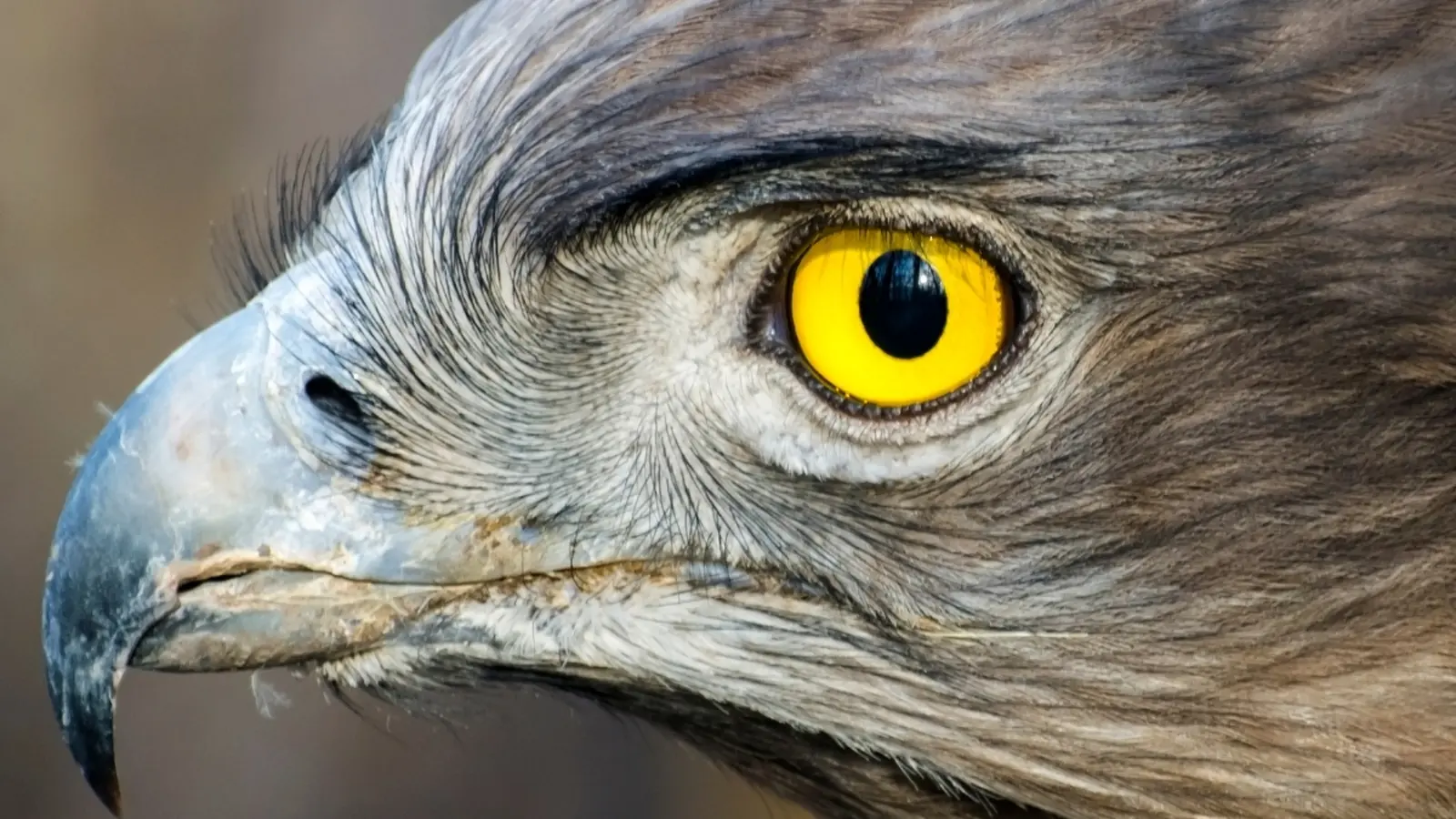
Imagine looking out from 500 meters up and spotting the slightest movement on the ground. Sharp, relentless vision—that's the daily reality for many raptors. Oddly, the inner retina that supports that acuity in birds does so without the one thing most other vertebrate nervous tissue depends on: blood vessels. No capillary network, no direct oxygen supply. How do they keep nerve cells functioning in an essentially anoxic environment? The answer lies in a curious, centuries-old structure called the pecten oculi and a metabolic trade-off that turns conventional assumptions about vertebrate neural vulnerability on their head.
In mammals, including humans, retinal neurons rely on red blood cells delivering oxygen to convert glucose into ATP efficiently. Without oxygen, those cells rapidly fail. Birds, however, evolved a different arrangement: their retina is avascular, meaning it lacks blood vessels. Oxygen must diffuse from the surface, and for much of the inner retinal tissue that route is insufficient. Yet the tissue survives and, more than that, sustains extraordinary visual performance.
Short sentences help. Complex ideas follow. Bird retinas run largely on anaerobic glycolysis—the biochemical pathway that extracts modest amounts of energy from glucose without oxygen. It’s an inefficient mechanism. It produces lactic acid, and lactic acid can be corrosive if allowed to accumulate. So the real puzzle wasn’t the lack of vascular supply—many tissues can tolerate short anoxic episodes—but how avian retinas avoid a toxic buildup while maintaining the glucose throughput a fast, information-rich organ needs.
The clue has always been the pecten oculi, a comb-like, highly vascularized ridge that sits adjacent to the retina. Discovered in the 17th century, the pecten has long been a subject of debate among anatomists—an oddity with no clear function. New experimental work led by researchers at Aarhus University offers a compelling explanation: the pecten is a high-capacity transporter that ferries glucose into the eye while simultaneously clearing metabolic byproducts like lactic acid away from sensitive retinal cells.
The pecten oculi is a crucial part of the bird's eye.
Scientific background and experiment details
To test the idea, investigators observed live zebra finches and combined physiological measurements—oxygen levels, metabolite concentrations—with gene-expression profiling in retinal tissue. The results were decisive. The inner retina showed no measurable oxygen consumption; gene signatures and metabolite profiles matched a tissue powered predominantly by anaerobic glycolysis. But the retina also displayed an unusual tolerance to anoxia that would be lethal to comparable mammalian neural tissue.

That tolerance comes with a cost. The eye needs a lot of glucose—about 2.5 times the uptake of the bird brain, according to the team’s analysis. The pecten’s dense blood supply and its strategic placement make it a biological pump: it supplies glucose in large volumes while removing lactic acid before concentrations reach damaging levels. In effect, the pecten decouples oxygen delivery from nutrient delivery, allowing the retina to remain avascular and optically clearer than it would be if filled with blood vessels that scatter light.
Why might birds evolve such a system? Several adaptive advantages suggest themselves. An avascular retina reduces optical distortion and scattering that accompany intraretinal blood vessels—critical when spotting small prey from great distances. A structure that supplies glucose independent of ambient oxygen could also be advantageous for high-altitude migrants that spend long periods where atmospheric oxygen is low. Consider the short-toed snake eagle: its retina thickness exceeds the diffusion limits that work for mammals, yet it enjoys remarkable visual acuity. The pecten may be one of the evolutionary keys that made such adaptations possible.
The study is also notable for its interdisciplinary scope. It pulled together expertise in physiology, molecular biology, and comparative anatomy, and it represents nearly a decade of work. Along the way, researchers compared multiple bird species and tied differences in retinal architecture to ecological lifestyles—soaring predators, ground foragers, and long-distance migrants each carrying different visual demands.
Expert Insight
"This clears up a long-standing mystery in avian biology," says Dr. Mira Koll, a vision scientist at the Institute for Comparative Neurobiology. "We used to speculate that the pecten might regulate intraocular pressure, or serve purely as a structural element. Showing it functions as a metabolic conveyor belt helps explain both the remarkable optical clarity of bird eyes and their resilience under low-oxygen conditions."
Beyond bird biology, the findings have translational promise. Understanding how neural tissue withstands prolonged anoxia—while exporting toxic metabolites effectively—may inspire new approaches for protecting brain tissue during strokes or improving organ preservation strategies. The mechanisms birds use to tolerate anoxic stress could suggest molecular targets or delivery systems that mimic the pecten’s dual supply-and-clearance role.
There is more to probe. Researchers now want to map precisely how glucose is transported from blood across the pecten into the vitreous and how lactic acid is shuttled away. They will also explore whether pharmacological or engineering interventions can emulate aspects of this system in mammalian models. For now, the pecten oculi moves out of the realm of anatomical curiosity and into functional prominence—the eye’s secret plumbing revealed, one experiment at a time.
Curiosity remains. But the next time you see a hawk lock onto a tiny moving dot below, remember: some of the most elegant biological engineering is invisible to the naked eye.













Leave a Comment
Comments (2)
So they think the pecten could inspire stroke treatments? hmm. cool idea, but how transferable is that to mammal brains, really? seems like a big leap.
Wow this is wild. Birds basically built a glucose pump for their eyes? Love that evolution finds clever hacks. Makes me wanna watch hawks for hours lol