

3 Minutes
Swap the same-old run for a bike ride. Or climb stairs instead of taking the elevator. Small changes. Big implications.
A long-term analysis from researchers at the Harvard T.H. Chan School of Public Health ties greater variety in weekly physical activities to a lower risk of death. Working with self-reported data from more than 111,000 people over roughly three decades, the team found that participants who spread their exercise across many different types of activity experienced about a 19 percent lower mortality risk than those who stuck to a narrower routine, given similar overall exercise volume.
Study design and what the numbers mean
The research appears in BMJ Medicine and uses observational data from large cohorts of health professionals tracked for about 30 years. Participants logged diverse activities — everything from swimming and cycling to mowing the lawn and climbing stairs — and researchers adjusted the analysis for lifestyle factors, diet, age, sex and other demographics to reduce confounding. The statistical relationship is robust, but the study cannot prove causation: variety correlates with lower mortality, rather than demonstrating a direct cause-and-effect link.
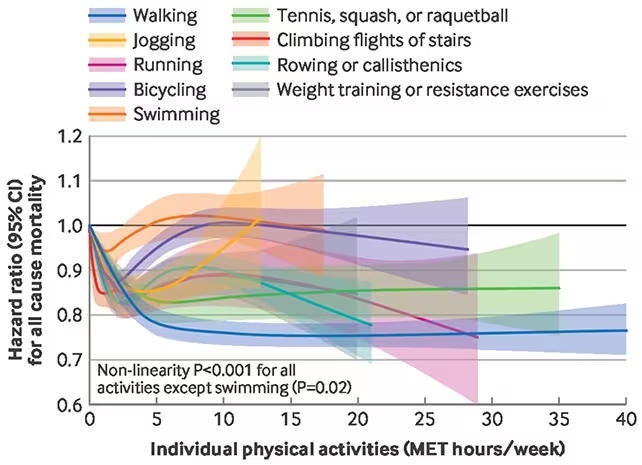
There are practical nuances in the findings. Total exercise still matters: people who did more physical activity overall tended to live longer. But the benefits flattened out around 20 hours of activity per week; beyond that, extra hours didn’t translate into noticeably lower mortality. And intensity counts: a reasonable level of vigor — not just gentle movement — contributed to the effect the team observed.
Why mixing activity might help
Think of your body like a toolkit. Different tools fix different problems. Aerobic routines build heart and lung endurance. Strength work preserves muscle and bone. Balance and flexibility exercises reduce falls and improve mobility. When you rotate activities you’re not just repeating the same adaptation; you’re broadening the physiological benefits.
Nutrition scientist Yang Hu, quoted by the study team, notes that people naturally change activities over time as preferences and health conditions evolve. That variety could preserve function across body systems better than a one-dimensional program. Tom Yates, a physiologist at the University of Leicester who was not involved in the research, likened it to diet: variety itself may carry distinct health advantages.
From a public-health perspective, the message is twofold: increase total physical activity where possible, and don’t be afraid to mix it up. A brisk walk Monday, strength training Tuesday, cycling Wednesday, active gardening on weekends — all count. The study’s inclusive definition of activity means daily chores and stair climbs register if done with sufficient effort.
Limitations and what to watch for
Self-reported activity is noisy. People over- or under-estimate exertion. The cohorts were also predominantly White health professionals, which limits how widely the results can be generalized. The team did not measure the effects of individuals switching routines over time; they compared different people’s routines rather than tracking deliberate changes within the same person.
Still, the analysis strengthens an existing body of epidemiological evidence: physical activity is protective, and variety may add an extra layer of benefit. If you’re aiming for long-term health, prioritize consistency and try introducing one new form of movement each week. It might improve fitness, reduce boredom, and — according to the latest data — be one more nudge toward a longer life.














Leave a Comment
Comments
No comments yet. Be the first.