
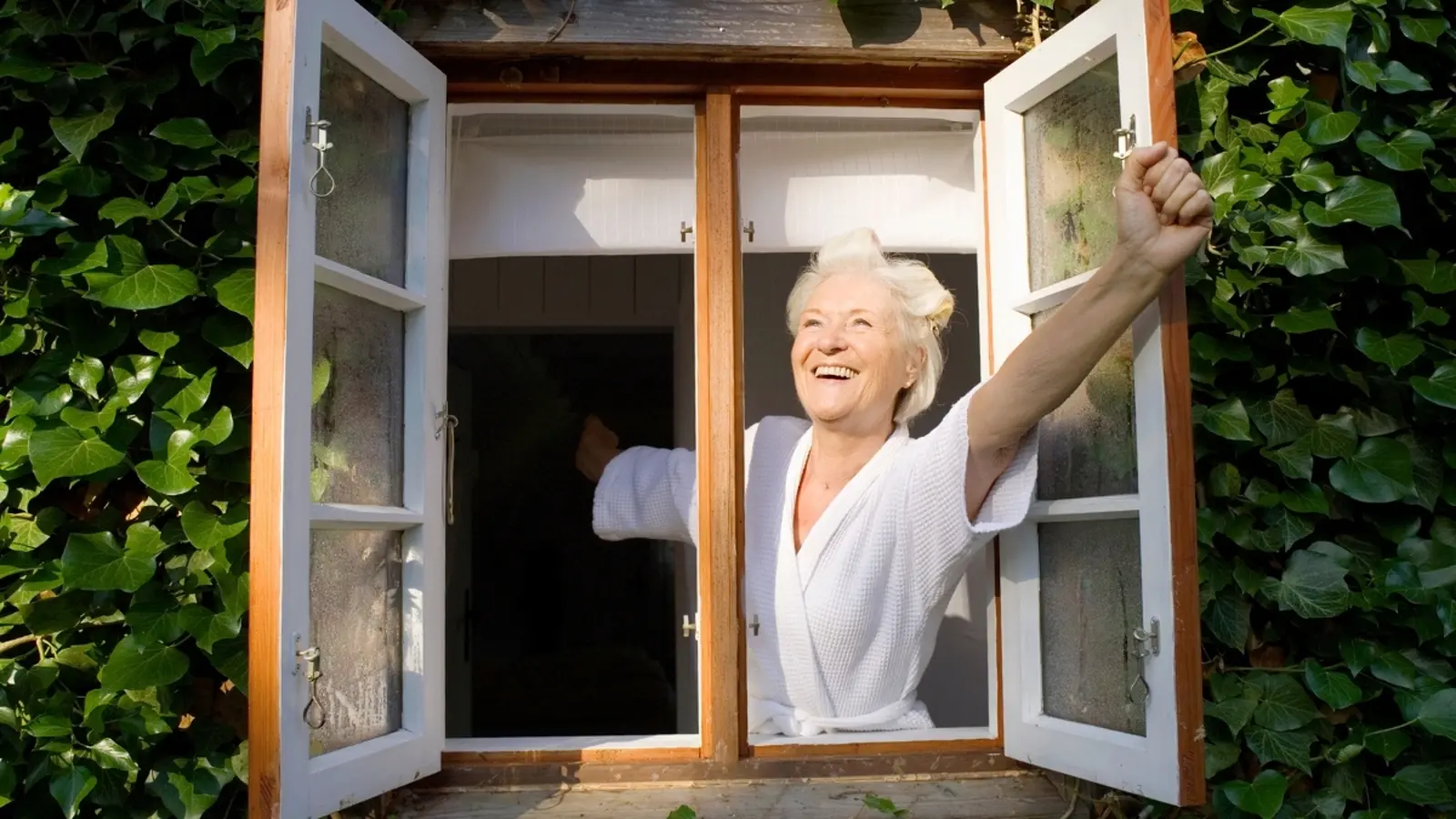
5 Minutes
Open a window for five minutes. That tiny act can change the chemistry of your living room, the comfort of your lungs, and even the mental sharpness of everyone inside. The recent social media craze calling this ritual 'house burping' may sound whimsical, but the principle behind it is older and more practical than a hashtag.
Why airing matters: the science of indoor air
Homes are not neutral boxes. They trap moisture from showers and cooking, fumes from cleaners and furniture, fine particles from candles and stoves, and the aerosols people exhale. In well-sealed, energy-efficient houses, heat stays in—and so do pollutants. Over days and weeks, indoors can accumulate a cocktail of gases, PM2.5 (fine particulate matter small enough to reach the deep lung), volatile organic compounds, and biological aerosols like viruses.
Ventilation dilutes that cocktail. That simple fact underpinned public-health advice during the COVID-19 pandemic: better air exchange reduces the concentration of airborne viruses and therefore infection risk. In controlled studies, classrooms that opened doors and windows saw carbon dioxide levels fall roughly 60% and modeled viral aerosol loads drop by more than 97% over an eight-hour day. The area of the room with high infection risk shrank substantially. Practical, cheap, and immediate.
But it is not all one-way. Outdoor air brings its own hazards. Traffic and industrial emissions produce PM2.5, nitrogen dioxide (NO2), and black carbon. These pollutants damage heart and lung tissue and are linked to cognitive decline and earlier mortality. In many urban homes, a large fraction of indoor fine particles originate outside, seeping in through vents, gaps, and open windows. So when you open windows facing a busy road at rush hour, you may be inviting a spike of exhaust and brake dust just as it peaks.

Finding balance: when and how to ventilate
The trade-off depends on place and timing. If your house fronts a quiet, tree-lined street, airing out will almost always lower indoor pollution and lower the risk of airborne infection. If you live beside a motorway, the calculus shifts. Short, full-window bursts—known in German as Stoßlüften—exchange air quickly without cooling the rooms and furniture as much as leaving a small gap open all day. Cross-ventilation, opening windows on opposite sides of the building, accelerates air exchange even further.
Timing is surprisingly important. Urban pollution tends to peak during morning and evening commutes. Midday, late at night, or just after rain—when particles have been scrubbed from the atmosphere—are generally better windows for ventilating. Five to ten minutes of wide-open windows in winter costs pennies in heat loss compared with the chronic medical and quality-of-life burden of exposure to poor indoor air: think chronic obstructive pulmonary disease (COPD), frequent asthma attacks, and the long-term costs of treatment.
There is also an often-overlooked consequence: cognitive effects. Elevated indoor PM2.5 and carbon dioxide correlate with poorer concentration, slower reaction times, and higher reports of anxiety and low mood. A stuffy room is not only physically unhealthy; it quietly nudges down productivity, learning, and well-being.
Practical steps that actually work
Start with awareness. Know where your nearest busy road is. Note prevailing wind directions. If noise and pollution from outside are a problem, ventilate on the quieter side of the home or use shorter bursts when the traffic thins. Stoßlüften—open every window fully for a few minutes—flushes indoor air rapidly and avoids unnecessary cooling of walls and furniture. Run extractor fans during showers and cooking. Consider mechanical ventilation with heat recovery (MVHR) if you live in a tightly sealed building and want continuous air exchange without major energy penalties.
For households with vulnerable members—children, older adults, people with asthma, COPD, or heart disease—pay extra attention. Pets can act as early warning systems: dogs and cats often show respiratory irritation first, since they live closer to the floor where heavier particles settle. Veterinary studies have linked poor indoor air to lung irritation in animals; that should be a red flag for humans sharing the space.

Monitoring helps. A small CO2 monitor is a useful proxy for ventilation adequacy: sustained CO2 above roughly 1,000 ppm usually signals insufficient fresh air for occupied spaces. Low-cost PM2.5 sensors can show whether outdoor particulate spikes are entering when windows are opened. Use those data to schedule airing: avoid peak outdoor pollution periods and aim for short, efficient exchanges.
.avif)
Expert Insight
Dr. Anna Keller, an environmental-health scientist who studies indoor air in temperate climates, notes: 'People imagine ventilation as either open windows all day or nothing. In fact, short, targeted ventilation is often best. It's about reducing cumulative exposure—the dose we all breathe over time—while minimizing harm from outdoor sources like traffic. Combine smart timing with cross-ventilation and, where feasible, mechanical recovery systems to keep both air quality and energy use in check.'
Her lab work shows that a few well-placed five-minute ventilation sessions per day can halve typical indoor aerosol concentrations in schools and homes, provided those bursts avoid rush-hour pollution. 'Simple changes,' she adds, 'can prevent chronic problems that are far more expensive and damaging than the minor heat you lose in winter.'
Wider implications and future prospects
As cities densify and buildings become more airtight for energy efficiency, the question of how to manage indoor air becomes a public-health priority. Urban planners and architects now consider proximity to roads, tree cover, and ventilation design when retrofitting schools and housing. Technology is catching up too: compact heat-recovery ventilators and better filtration systems can provide continuous, filtered fresh air with manageable energy costs. These systems are particularly valuable in high-pollution settings where opening windows frequently is inadvisable.

Education matters. Simple public guidance—open windows briefly outside rush hours, use cross-ventilation, monitor CO2—can reduce infection risk during respiratory virus seasons and limit chronic exposure to indoor pollutants. The social-media lingo may be playful, but the underlying practice is sound. A home that never 'burps' will accumulate stale, concentrated air; one that never closes its windows to a busy highway will import harmful particles. The trick is to know your neighborhood, time your airing, and choose methods that flush your rooms without inviting new risks.













Leave a Comment
Comments (2)
Is this even true tho? If you live by a busy road, won't airing just swap bad air into the room? Need PM2.5 graphs before I start flinging windows open.
Wow, house burping actually legit? Open windows 5 min, who knew. I always felt foggy in my flat, gonna try cross ventilation, fingers crossed!