
3 Minutes
Massive Freshwater Reservoirs Found Beneath the Ocean
Imagine an invisible lake stretching for hundreds of kilometers, trapped beneath layers of sand and silt under the seafloor. What if this hidden store of freshwater could alter how we plan for coastal water security? Recent work by an international team of oceanographers and geoscientists suggests it can.
Background and the Expedition
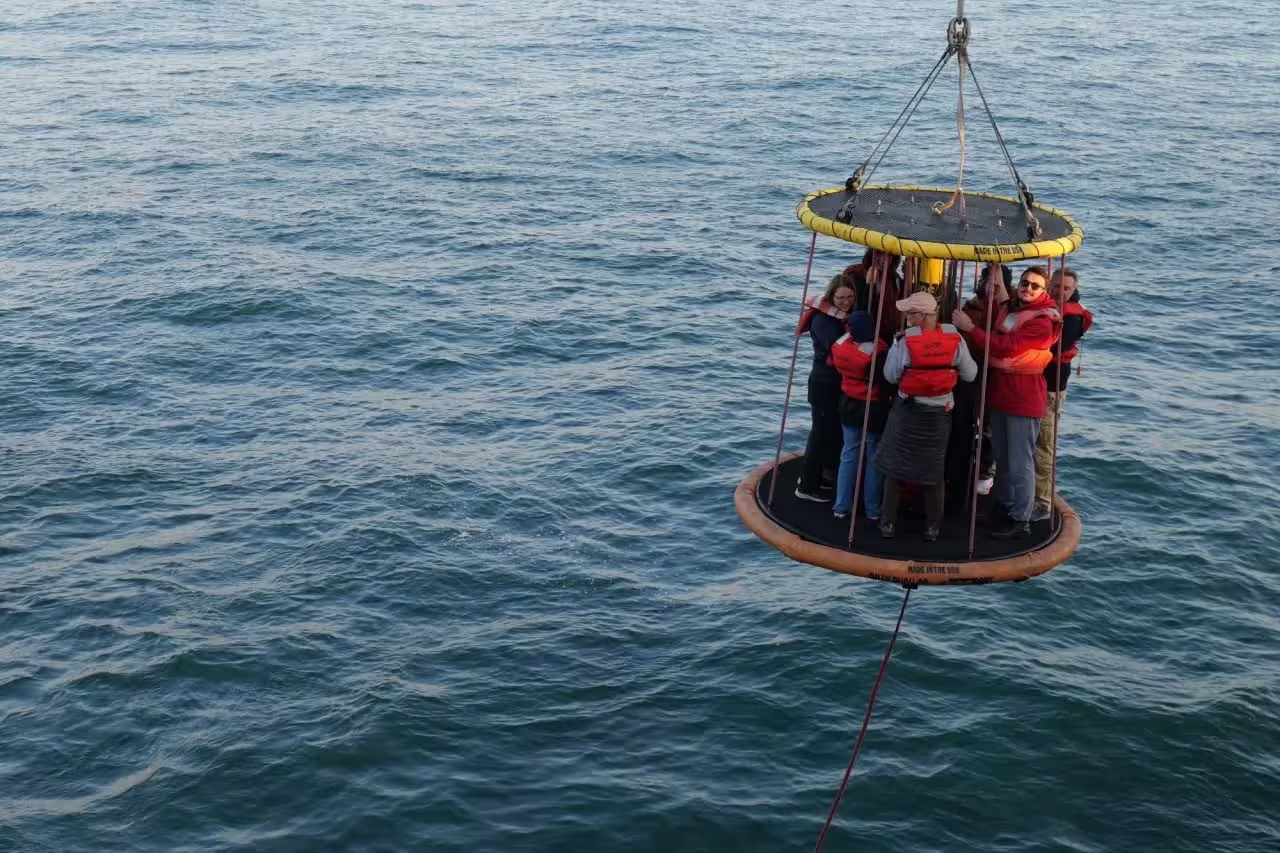
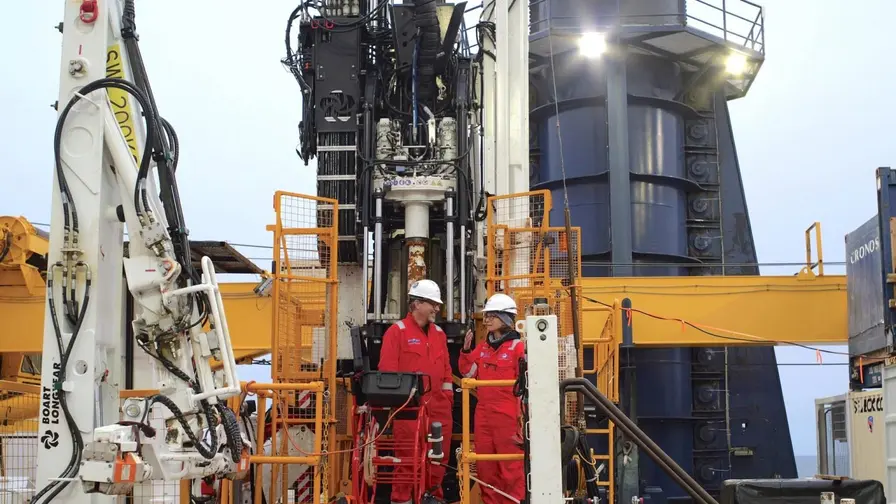
In a first-of-its-kind effort, scientists involved with the International Ocean Discovery Program (IODP) carried out Expedition 501 to target offshore aquifers and the sediments that hold them. Forty researchers from thirteen countries drilled and recovered sediment cores roughly 200 meters beneath the seafloor off the New England coast. The campaign combined conventional core retrieval with direct sampling of pore waters—the fluids trapped between sediment grains—allowing an unusually precise look at offshore groundwater systems.
Researchers have known about distant, submerged aquifers since the 1970s. But those early detections were sparse and indirect. This mission changes the record because it documents and samples multiple, distinct freshwater-bearing sediment types—both continental and marine in origin—rather than relying only on geophysical hints. The result is a clearer map of where freshwater resides beneath the continental shelf, and how it got there.
Findings and Scientific Methods
The team found freshwater locked in sand layers—classic aquifers—and also in finer-grained clay layers that act like seals, trapping water in place. Chemical and isotopic measurements performed on the retrieved pore waters indicate the water's salinity is far lower than seawater, a clear signal of freshwater. Now scientists are applying isotopic dating techniques and tracer chemistry to determine the age and provenance of these fluids. Were they recharged during glacial periods when sea levels were lower? Or did ancient river systems carry them offshore? The models being developed aim to answer that.
Isotopic dating and geochemical tracers do more than age the water. They reveal circulation pathways and residence times—how long water has been sitting beneath the seabed. That matters because a body of freshwater isolated for tens of thousands of years behaves differently from one recently recharged. Its chemistry, microbial inhabitants, and vulnerability to extraction all vary with age.
Initial estimates from the New England margin point to about 1,300 cubic kilometers of trapped freshwater beneath the shelf. To put that in perspective: New York City's current annual water use is roughly 1.5 cubic kilometers. So, in theory, the discovered volume could supply a single large city for centuries—if the water were accessible, sustainable to extract, and legally and ethically available for use. Those are big ifs.
Ecological Links and Nutrient Cycling
The mission is not only counting liters. Scientists are measuring nutrient cycles—especially nitrogen—within continental-shelf sediments to understand how groundwater fluxes influence microbial communities and, in turn, coastal ecosystems. Subsurface fluids can deliver nutrients or contaminants to the overlying ocean, subtly shaping productivity, oxygen levels, and food webs along the coast. Tracking chemical concentrations in both the sediments and waters helps link deep subsurface processes to surface ocean health.
"These findings force us to widen our definition of freshwater resources," said a senior IODP scientist involved in the operation. "Offshore aquifers are not a panacea, but they represent a previously underappreciated component of the global freshwater budget."
Going forward, the priority is clear: refine the volume estimates, pin down ages, and test the practicality of sustainable use. New surveys, coupled with improved numerical models and continued isotope work, will show whether offshore freshwater becomes part of long-term coastal water planning—or remains a scientific curiosity with outsize implications for how we view Earth's hidden water.

Leave a Comment
Comments
No comments yet. Be the first.