
5 Minutes
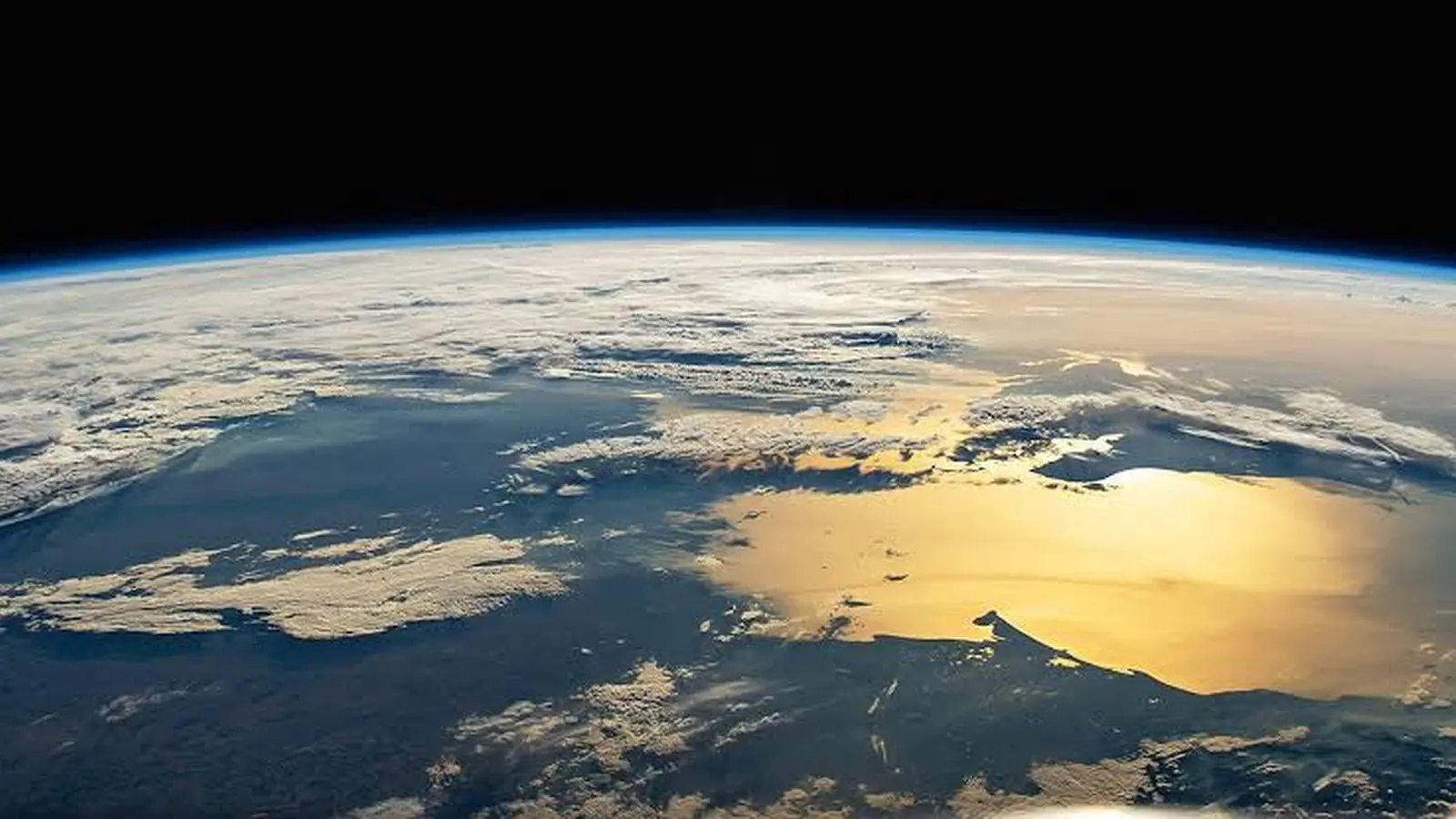
Imagine the early Earth as a violent kitchen: molten rock simmering for millions of years, metals sinking, gases exhaling into space. Small changes in the recipe mattered. A pinch more oxygen — or a pinch less — and the ingredients life needs might have been whisked away before a single cell ever formed.
Phosphorus and nitrogen sit near the top of the periodic guest list for life. Phosphorus anchors DNA and RNA and is central to cellular energy transfer; nitrogen is a backbone element of amino acids and proteins. But during planetary formation these elements don’t simply wait politely on the surface. They get shuffled between core, mantle and atmosphere, and the maestro of that shuffling is oxygen.
New modeling work from researchers at ETH Zurich led by Craig Walton and Maria Schönbächler suggests that Earth’s readiness for life came down to an exceptionally narrow range of oxygen conditions during core formation. Too reducing, and phosphorus binds with iron and dives into the core, effectively removing it from the material available to form life-bearing chemistry. Too oxidizing, and nitrogen tends to escape or be sequestered in forms that leave the surface impoverished. In between — a chemical Goldilocks zone — both elements remain accessible in the mantle, where later geology can deliver them to the crust and surface environments.
This is not merely an academic point about where elements end up. It reframes how we evaluate habitability. Astronomers have long prioritized the presence of liquid water and the right orbital distance from a star. But those are surface conditions, downstream of deep-time chemistry. A planet that looks habitable from light-years away may be sterile because its own formation robbed it of phosphorus or nitrogen before oceans or atmospheres stabilized.
Walton’s team ran extensive computer simulations of core–mantle differentiation, varying the oxygen fugacity — a technical term for the effective oxygen availability that controls whether elements prefer metal or silicate phases. The results are striking: the window of oxygen conditions that keeps both phosphorus and nitrogen in the silicate mantle is surprisingly tight. According to the study, the early Earth landed within that slender band roughly 4.6 billion years ago; small deviations would have produced a very different chemical endowment.
.avif)
What about our neighbors? The models suggest that Mars, for instance, formed under conditions outside that narrow band. Its mantle may retain more phosphorus than Earth in some scenarios, but significantly less nitrogen. That imbalance could help explain why Mars, despite early evidence for liquid water, did not develop—or sustain—the same diversity of surface chemistry that nurtured life here.
These findings shift the search for life beyond simply hunting for water. If a planet’s bulk composition and the oxygen fugacity of its formation environment predispose it to lose key biogenic elements, then habitability becomes a question of stellar and nebular chemistry as much as of surface temperature. Because planets generally inherit their material from the protoplanetary disk, which derives from the host star, astronomers can begin to refine targets by examining stellar abundances of elements like oxygen and iron.

How practical is that? Quite practical, in principle. Large telescopes and spectrographs can measure stellar compositions. If a star’s chemistry indicates a composition unlikely to produce planets with the right oxygen balance during core formation, those systems might be deprioritized in the hunt for life. That narrows the field in a sensible, science-driven way: not every temperate planet should be assumed equally promising.
There are still caveats. Planet formation is messy. Giant impacts, late volatile delivery by comets and asteroids, and subsequent atmospheric evolution all add complexity. But the ETH Zurich work highlights a fundamental, early filter that operatively sets the stage for everything that follows. It also lends urgency to integrating geochemical modeling with exoplanet observations: habitability assessments should combine surface diagnostics with inferences about deep interior chemistry.
Expert Insight
“This study reminds us that habitability is a story written from the inside out,” says Dr. Lila Moreno, a planetary geochemist at the Space Science Laboratory (commentary provided for context). “We often think in terms of oceans and climates, but the delivery and retention of phosphorus and nitrogen are controlled by processes that happened during the planet’s fiery infancy. Observations of a star’s chemical fingerprint can tell us a lot about that hidden chapter.”
Moreno adds, “It’s an invitation to rethink target lists for future missions. Telescopes that can combine atmospheric spectra with constraints on stellar and disk chemistry will help us prioritize worlds that are not only wet and temperate but chemically equipped for life.”
Beyond target selection, the implications touch experimental lab work and mission planning. Laboratory experiments that replicate metal–silicate partitioning under varied oxygen fugacities can tighten the model constraints. Meanwhile, upcoming space missions and next-generation observatories that characterize exoplanet atmospheres, and measure stellar compositions across many systems, will provide the data needed to test these ideas on a cosmological scale.
In philosophical terms, the research returns us to contingency. Habitability is not guaranteed by location alone. It emerges from a complex interplay of stellar chemistry, planetary differentiation, and later surface and atmospheric evolution. The chemical Goldilocks zone for phosphorus and nitrogen is one more filter explaining why Earth appears so uniquely conducive to life.
Thinking like this changes priorities. It favors a holistic approach that links telescopic observations with geochemical modeling and experimental petrology. The universe may be full of worlds with oceans; far fewer may possess the deep-time chemical balance that made our planet biologically fertile — and finding those rare cases will require looking beneath the surface, into the chemistry that shaped them from the start.

So when we ask whether a distant planet could host life, the answer may begin not at the shoreline but in the heart of its formation: a narrow band of oxygen history that decided whether two small elements would remain available to biology.









Leave a Comment
Comments (2)
Hmm, is this even true? Stellar composition decides life odds? Feels a bit neat, what about late comets...
wow didnt expect Earth's fate to hinge on a tiny oxygen window!! Mind blown sorta scary.