
3 Minutes
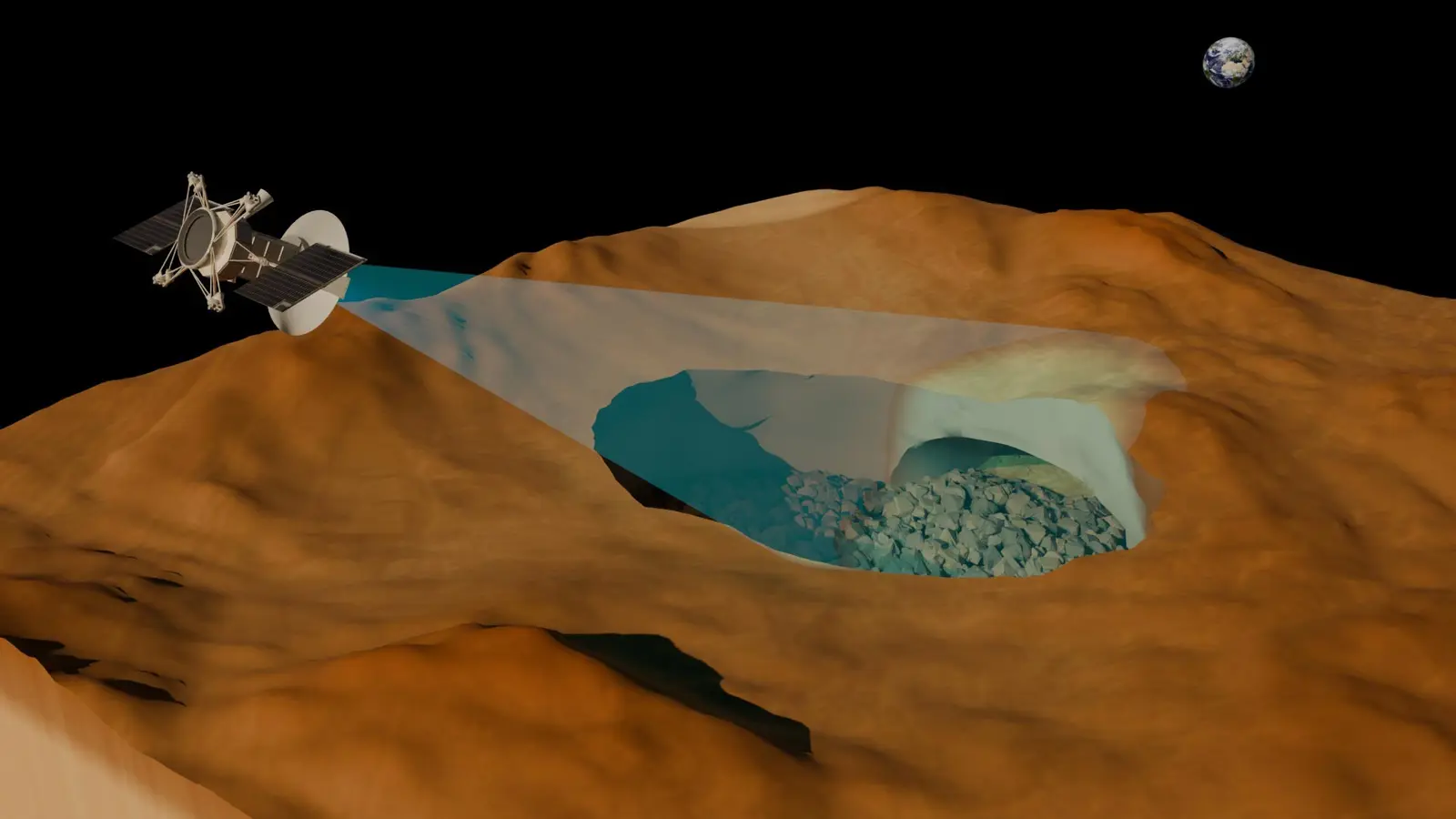
Imagine vast tunnels of cooled lava threading beneath Venus’s blistering plains — corridors hundreds of meters wide and tall, carved by flows that moved under an alien sky. That’s the picture emerging from recent radar studies: a planet where low gravity and a crushing atmosphere may have conspired to preserve extraordinarily large lava tubes.
Why Venus favors giant lava tubes
Lava behaves differently on Venus. The planet’s weaker surface gravity and dense atmosphere let molten rock develop a thick, insulating crust much more rapidly once it leaves a volcanic vent. The result: a surface shell that clamps over flowing lava, allowing molten channels to travel long distances while the interior keeps moving. Over time, the lava drains away and leaves behind hollow conduits — lava tubes — that can be far larger than those we commonly see on Earth.
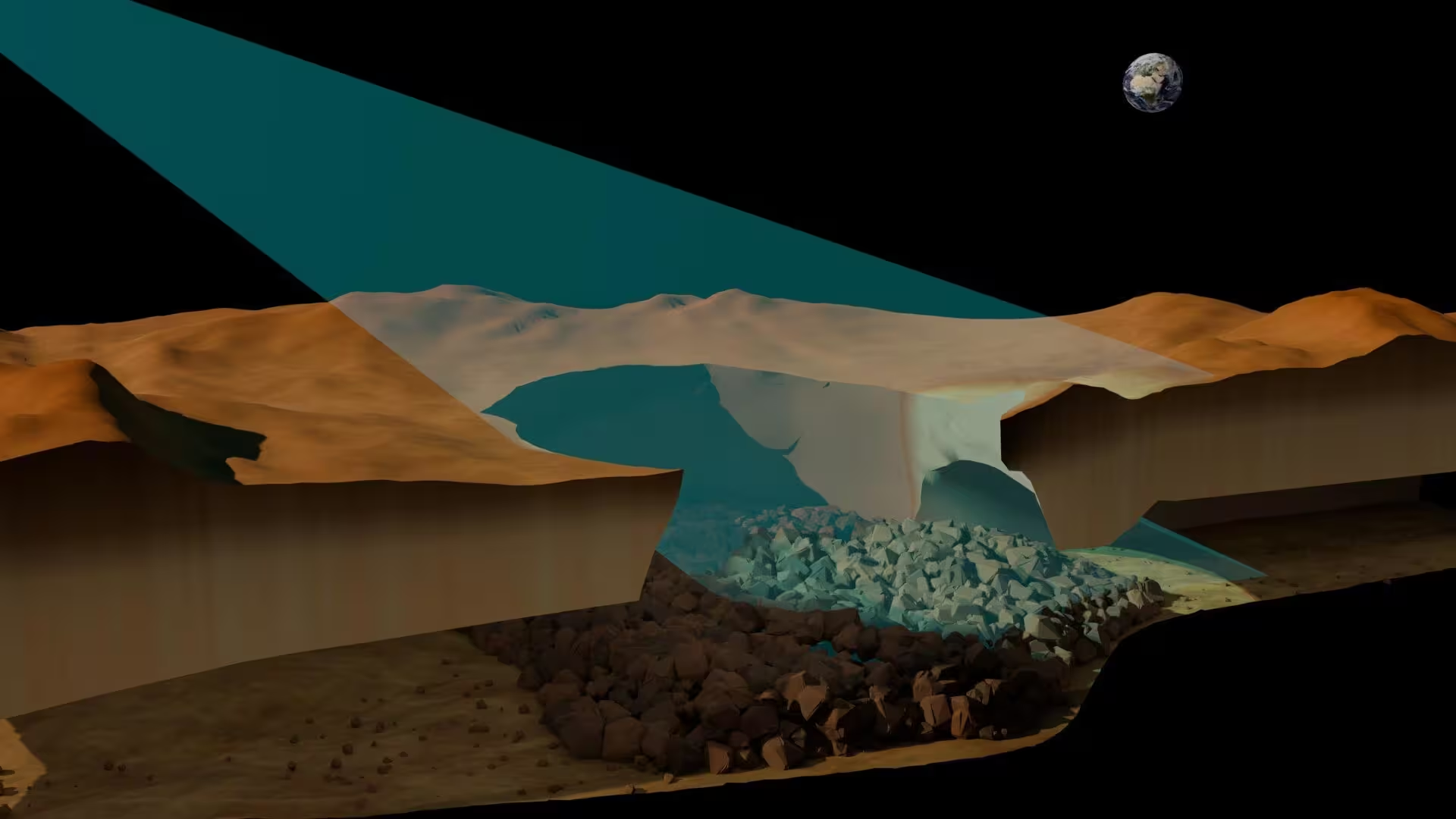
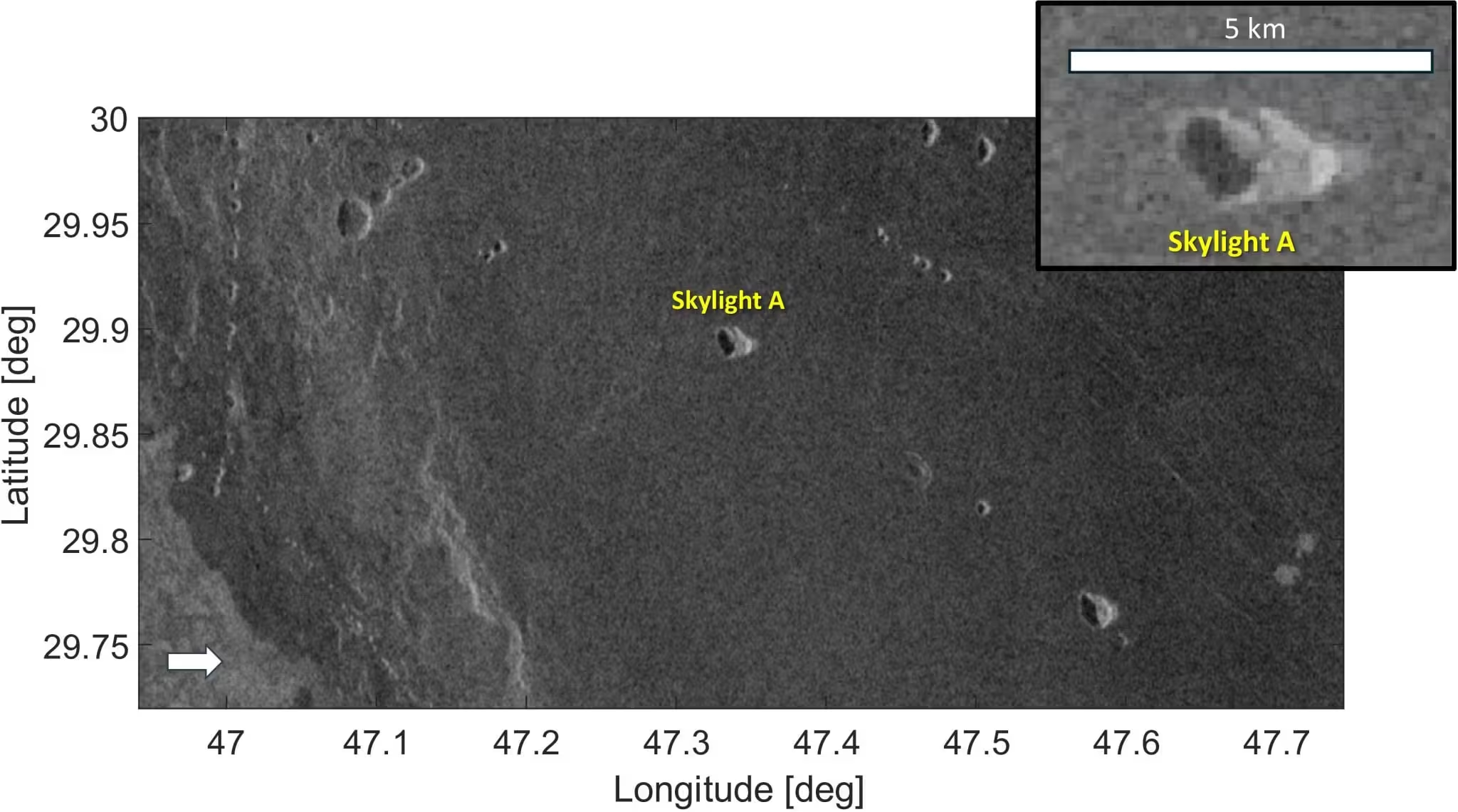
Remote-sensing data show an opening, or skylight, exposing the cavity. Measurements of that skylight suggest the tube beneath is both wider and taller than typical terrestrial analogs and exceeds many of the sizes predicted for Mars. In scale, it approaches the largest examples inferred on the Moon. That fits a broader pattern: Venus hosts lava channels and volcanic features that are unusually large compared with other rocky worlds.
Implications for exploration and future missions
“Current observations let us map and measure only the part of the cavity near the skylight,” a researcher on the team explains, “but terrain morphology and nearby similar pits imply the subsurface conduit could continue for at least 45 kilometers.” If that holds, these tubes are not isolated curiosities but components of an extensive underground network.
Confirming the length and continuity of these conduits requires sharper eyes. Upcoming missions carry precisely those instruments. ESA’s EnVision and NASA’s VERITAS will deploy advanced radar systems to produce higher-resolution surface maps, and EnVision will include a subsurface radar sounder capable of probing several hundred meters beneath the ground. Those tools can detect buried channels even where no skylight is visible.
Finding long, intact lava tubes on Venus would change how we think about the planet’s volcanic plumbing and its thermal evolution. It would also open practical possibilities: long, accessible subsurface cavities could provide sheltered sites for future landed instruments or human-tended platforms, protecting them from the extreme surface environment.
This discovery is a first chapter. Better radar, higher resolution, and targeted orbital passes will either confirm a labyrinth of Venusian tubes or force us to rewrite the story — either outcome will teach us something new about the hottest of our rocky neighbors.









Leave a Comment
Comments
No comments yet. Be the first.