
3 Minutes
Look up tonight and the pattern seems eternal: planets tracing neat paths around the Sun, a celestial choreography that feels permanent. But what if that calm is the product of a chaotic youthful episode—one that might have expelled whole planets from our family?
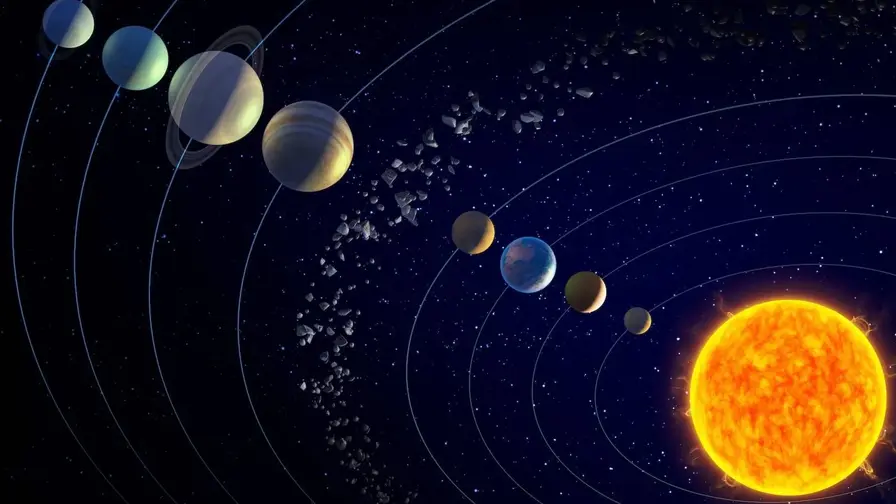
Astrophysicists have long used the Nice model to make sense of the Solar System’s rough childhood. In its newer incarnations the model entertains a startling possibility: the early system may have included one or even two extra ice giants, cousins to Uranus and Neptune, that later got kicked out as the giant planets shifted and buckled through a leftover disk of debris. That migration helps explain several big features we see today, from the Late Heavy Bombardment to Jupiter’s Trojan swarms. But when researchers pushed the model down to the scale of moons, the picture suddenly blurred.

Matthew Clement and colleagues at Johns Hopkins set up a battery of high-resolution simulations to watch what happens to satellite systems during the kind of planet-planet encounters the Nice model predicts. They didn’t just try a single recipe. They ran a broad “full spectrum” of initial conditions—scenarios with one extra ice giant, scenarios with two—and tracked how the inner architectures of Jupiter and Uranus responded to violent close encounters and ejections.
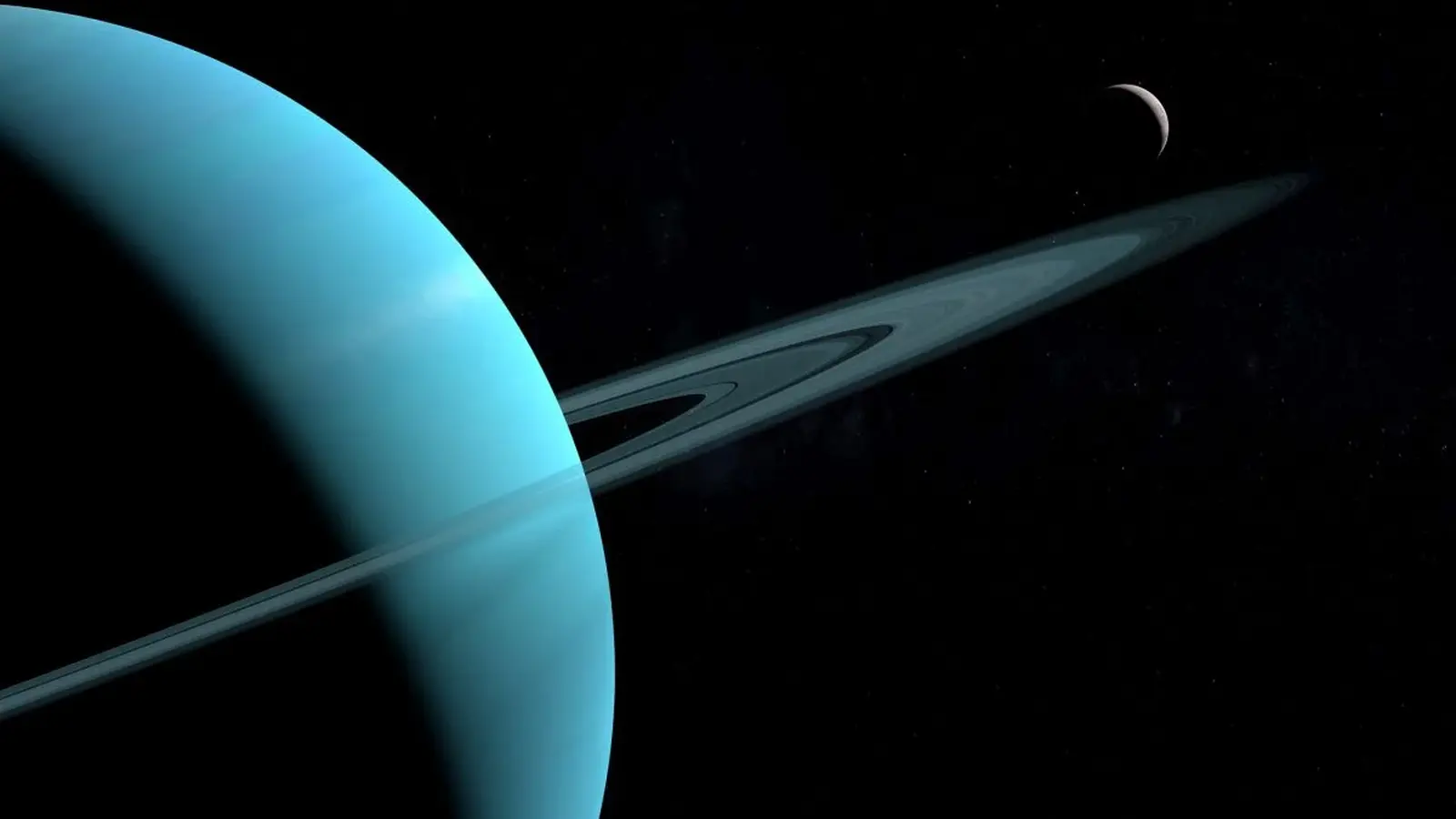
The outcome was unnerving. In the majority of plausible histories, Uranus’s regular moons don’t survive unscathed: orbits are jostled, collisions ensue, some moons are flung outward, others smashed together. Jupiter’s retinue is more robust, but even it can be perturbed. When the team asked whether both planets could retain intact satellite systems through the same instability, the answer was almost always no. Only a narrow, special set of circumstances left everything relatively untouched.

Either the moons we see around Uranus were sculpted by catastrophic events, or the standard Nice scenarios are missing key ingredients—because it’s hard to reconcile widespread satellite disruption with the serene system we observe now.
That conclusion opens several routes. Perhaps Uranus endured multiple upheavals: an early giant impact that tipped the planet onto its side and later encounters during planetary migration that shredded and reassembled its moons. Or perhaps the Solar System somehow threaded a cosmic needle—evolving along an improbably calm path that avoided deep encounters with Uranus. The third option is straightforward but unsatisfying: our dynamical models still lack important pieces, and the true sequence of ancient interactions simply isn’t captured by existing simulations.

Why does this matter beyond satisfying curiosity about lost worlds? Because moons record history. Regular satellite systems preserve clues about past gravitational encounters, collisions, and disk conditions. If Uranus’s inner moons were born from collisions after a destabilizing episode, their composition, orbital alignments, and geological scars should carry that signature. Telescopes like JWST are beginning to reveal those subtle fingerprints, and models like Clement’s point observers where to look.
It’s also a reminder that models that succeed at explaining large-scale architecture might stumble when asked to replicate finer details. The Nice model remains powerful for explaining many broad features of the outer Solar System, but detailed tests—down to moon systems and orbital inclinations—are exposing tensions that researchers must resolve.
Clement’s team published their results in Icarus, and they’re explicitly calling for more work: more simulation diversity, better constraints on early planetary masses and disk properties, and deeper observational probes of Uranus’s moons. The Solar System has given us a tidy arrangement today, but under the tidy surface there may be a messy past waiting to be read. Where will the next clue come from? Observations, simulations, or an unexpected relic hiding at the edge of our planetary neighborhood—time will tell.

Leave a Comment
Comments (1)
Wait so Uranus might've lost moons in a chaotic eviction? Feels wild, kinda doubtful tho. Simulations need more obs, or we missed something huge...