
3 Minutes
Imagine a speck so small it vanishes beneath a fingertip, yet it keeps the memory of a cosmic blow. That speck, a grain of baddeleyite tucked inside a lunar meteorite, has become the clue that points to a dramatic—and previously hidden—chapter of Solar System history.
The rock arrived on Earth as Northwest Africa (NWA) 12593, a chunk of Moon that was recovered in Mali and studied by a team led by planetary scientist Carolyn Crow at the University of Colorado Boulder. At first glance it looks like many other impact-battered samples: a breccia, a jumble of broken fragments welded together by violence. But buried in that rubble were 21 microscopic baddeleyite grains. In seven of them researchers found cubic zirconia, a crystalline phase that only forms at blistering temperatures—above roughly 2,370 °C.
Microscopic baddeleyite grains point to a massive Moon impact about 3.486 billion years ago.
How did the team pin a date on that blowing-hot instant? The baddeleyite carried tiny amounts of uranium, which decays into lead at a known rate. By measuring the lead content, the researchers clocked the moment those grains solidified: about 3.486 billion years ago. That timing is not random. It lines up with impact signatures preserved in ancient Australian and South African rocks—splotches of molten debris and altered minerals dated to 3.47–3.48 billion years ago—and with a string of collisions recorded in meteorites from the asteroid Vesta between roughly 3.85 and 3.47 billion years ago.

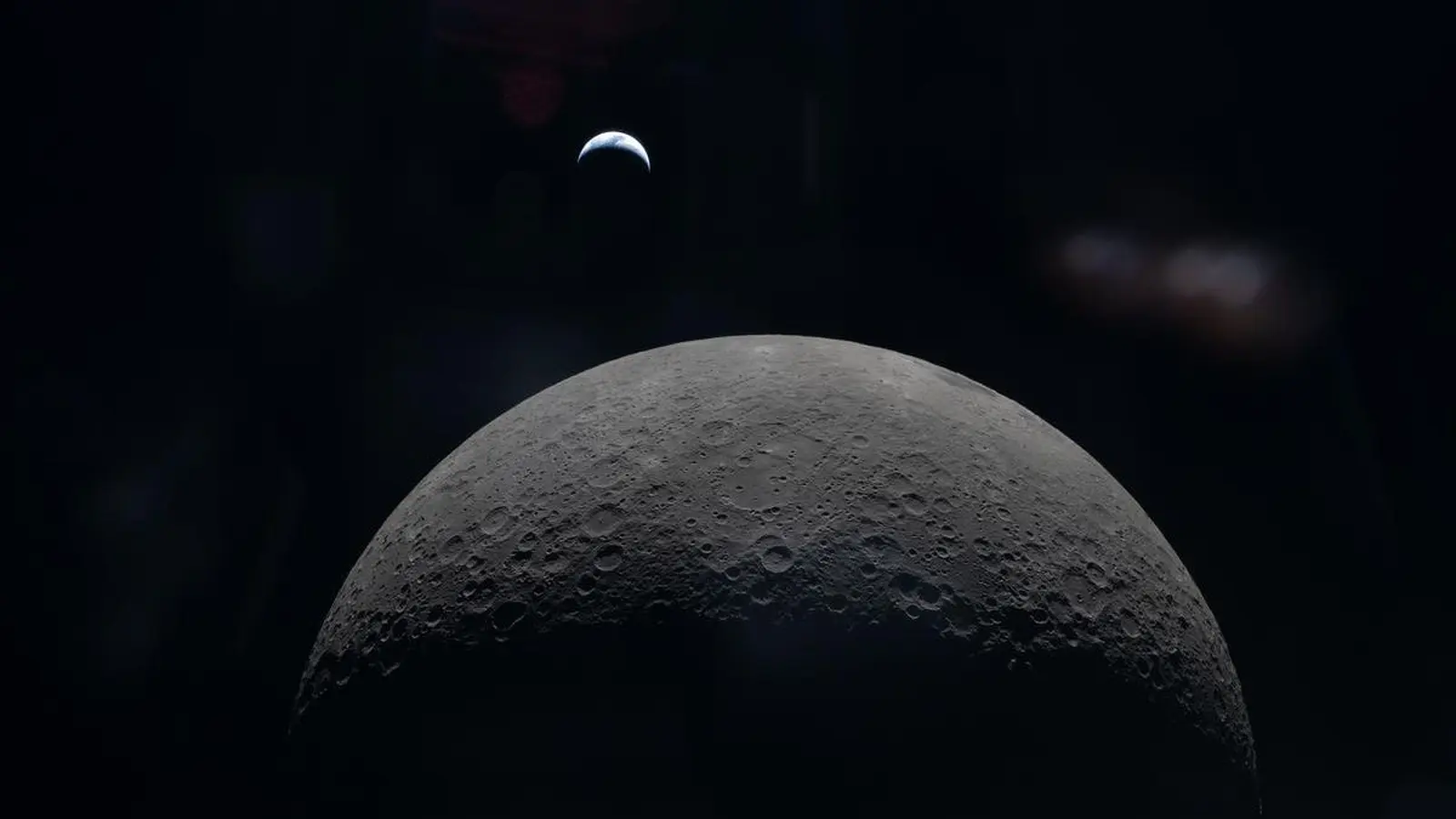
A map of the Moon showing the distribution of impact craters.

Put the pieces together and a pattern emerges: the inner Solar System may have stayed stormy far longer than the classic Late Heavy Bombardment window of 4.1–3.8 billion years ago. Rather than a tidy, closed chapter, bombardment appears to have smoldered, with episodic hammer blows arriving hundreds of millions of years later. In plain language: asteroid pinball kept going.
Why does that matter? Because the timing overlaps with a pivotal era on Earth—when the first cellular life forms were finding their footing. Large impacts are usually painted as purely destructive, and they can be. But they also punch holes in crust, drive hydrothermal circulation, and create hot pockets where chemistry gets interesting. Recent studies propose that impact-generated hydrothermal systems could be fertile cradles for microbial life. If catastrophic strikes were still frequent while life was emerging, those blows may have been both sculptor and incubator.
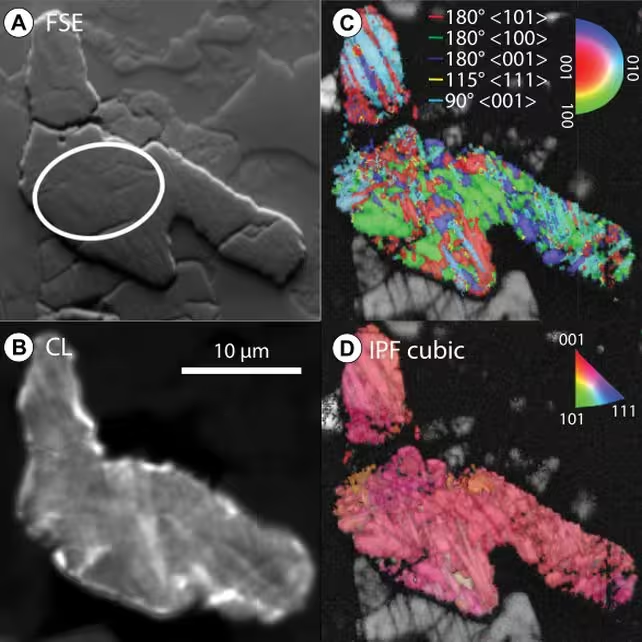
Electron backscatter diffraction imaging of one of the grains of baddeleyite. This technique is used to analyze the crystal structure of materials.
There are technical hurdles, of course. The Moon doesn’t erase craters the way Earth does, but its surface still accumulates scars on top of scars. Untangling overlapping events is like reading layered graffiti: you need tiny, well-preserved samples and careful lab work. That’s what baddeleyite delivered—an independent, high-temperature thermometer and clock that survived the turmoil and spoke plainly about one intense moment of heating on the lunar surface.
Those tiny mineral witnesses also force a rethink of how the inner planets evolved. If impacts were arriving in pulses well after the bowl of basins formed, planetary surfaces and oceans—and the nascent biosphere—were being remodeled intermittently. It’s a reminder that planetary history isn’t a single headline event but a series of edits, some subtle, some savage.

Scientists published the findings in Geology, and the discovery opens a new front for investigating Earth-Moon-Vesta impact links. The search will now widen: to more lunar meteorites, to terrestrial ancient rocks, to the rubble of small worlds. The past is written in tiny things. The trick is finding them and learning to read what they survived.








Leave a Comment
Comments (1)
Hold up, a few tiny baddeleyite grains rewrite the Moon's bombardment timeline? sounds wild, but could there be reheating or contamination, right??