
Giants make excellent headlines in myths. They stride through epics, lift houses, and wrestle heroes. They feel plausible until you start asking a few awkward, physical questions.
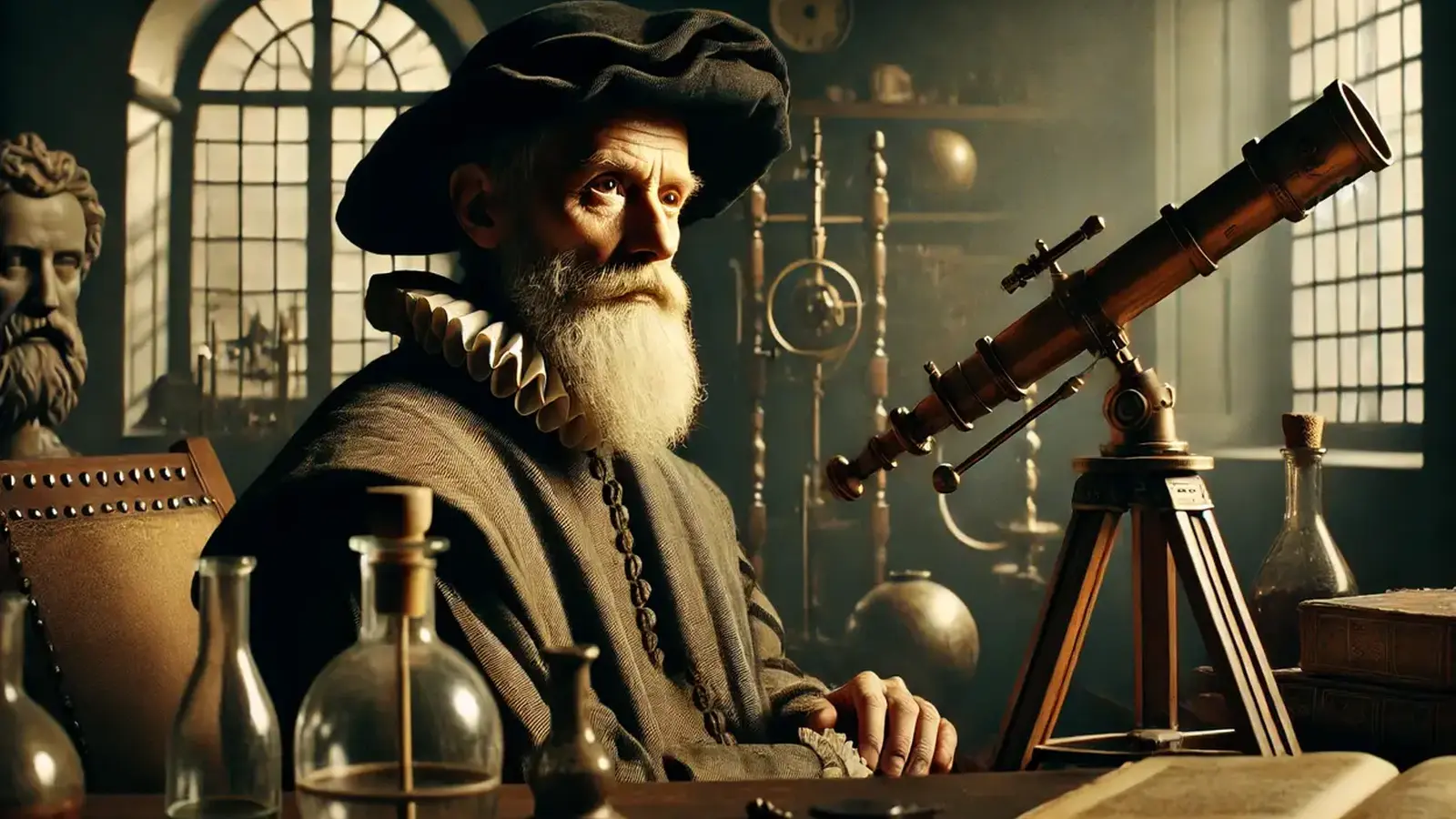
Nearly four centuries ago Galileo did just that. In his 1638 book, Dialogue Concerning Two New Sciences, he turned a simple question about size into a rule: when you scale an object up, its surface area grows like the square of linear dimensions while its volume—and therefore its mass—grows like the cube. Put bluntly: strength and weight do not keep pace.
Imagine an oak beam that bears a certain load. Make every linear dimension ten times larger. The beam’s cross-section—what gives it strength—grows by 10 squared, so about 100 times bigger. But the beam’s volume, and therefore its weight, grows by 10 cubed: roughly 1,000 times heavier. Strength up 100-fold. Mass up 1,000-fold. The math is merciless.
Apply that arithmetic to people. Bones function like structural beams supporting muscle, organs and skin. If you simply blow up a human to ten times our height while keeping the same proportions, the bones’ ability to carry load increases far more slowly than the body’s weight. With ordinary bone and muscle, a scaled-up human would buckle under its own mass long before becoming the colossus of legend.

There are only a couple of escapes from that verdict: either change the material—make bones far stronger than anything biology uses—or change the proportions, making limbs and supports disproportionately thicker. Nature chooses the latter. Look at elephants and hippos: their legs are thick, their bodies compact. Big animals are not simply blown-up copies of small ones; they are reshaped by the demands of weight and strength.
The problem reaches beyond anatomy. If you scaled tools and environments the same way, many everyday objects would fail. A ladder enlarged for a giant would likely snap under its own weight. A sword scaled up becomes absurdly heavy and unwieldy. A house that’s merely a magnified cottage could see its roof crushed by its own timbers. Fairy-tale settings often ignore the arithmetic that binds materials and structure together.
At the opposite extreme, smallness brings its own surprises. Tiny creatures enjoy relatively greater strength: muscles and legs scale with cross-sectional area while body mass shrinks faster. An ant can carry many times its body weight. Surface forces—electrostatic attraction, surface tension—looms larger for the very small. Water feels sticky; air feels thicker. A creature scaled down to a fraction of our size would experience a world where viscosity and adhesion matter in ways we rarely notice.
That’s why popular portrayals of miniaturized people are also misleading. A person reduced to one-tenth height would be proportionally far stronger for their size and would encounter glue-like water behavior and exaggerated surface effects. Flight, walking, even breathing would feel different because the relative importance of forces like drag and surface tension shifts with scale.
Evolution has long been working with this bookkeeping. Over millions of years animals have adapted shapes, limb thicknesses, and behaviors to match their size. Fossil records show giant insects in eras with different atmospheric conditions; modern large mammals have stout frames and modified gaits. Engineers and architects do the same: scaling laws shape bridges, beams, and high-rise design.
Galileo’s insight is elegantly simple and deeply practical. Area scales with length squared, volume with length cubed. From bones to bridges, from dragon-slaying giants to ant feats, that imbalance explains why size demands proportion, innovation, or impossibility. Next time you read a tall tale, remember that the magic is not only in the story but in the stubborn arithmetic beneath it.


Leave a Comment
Comments
No comments yet. Be the first.