
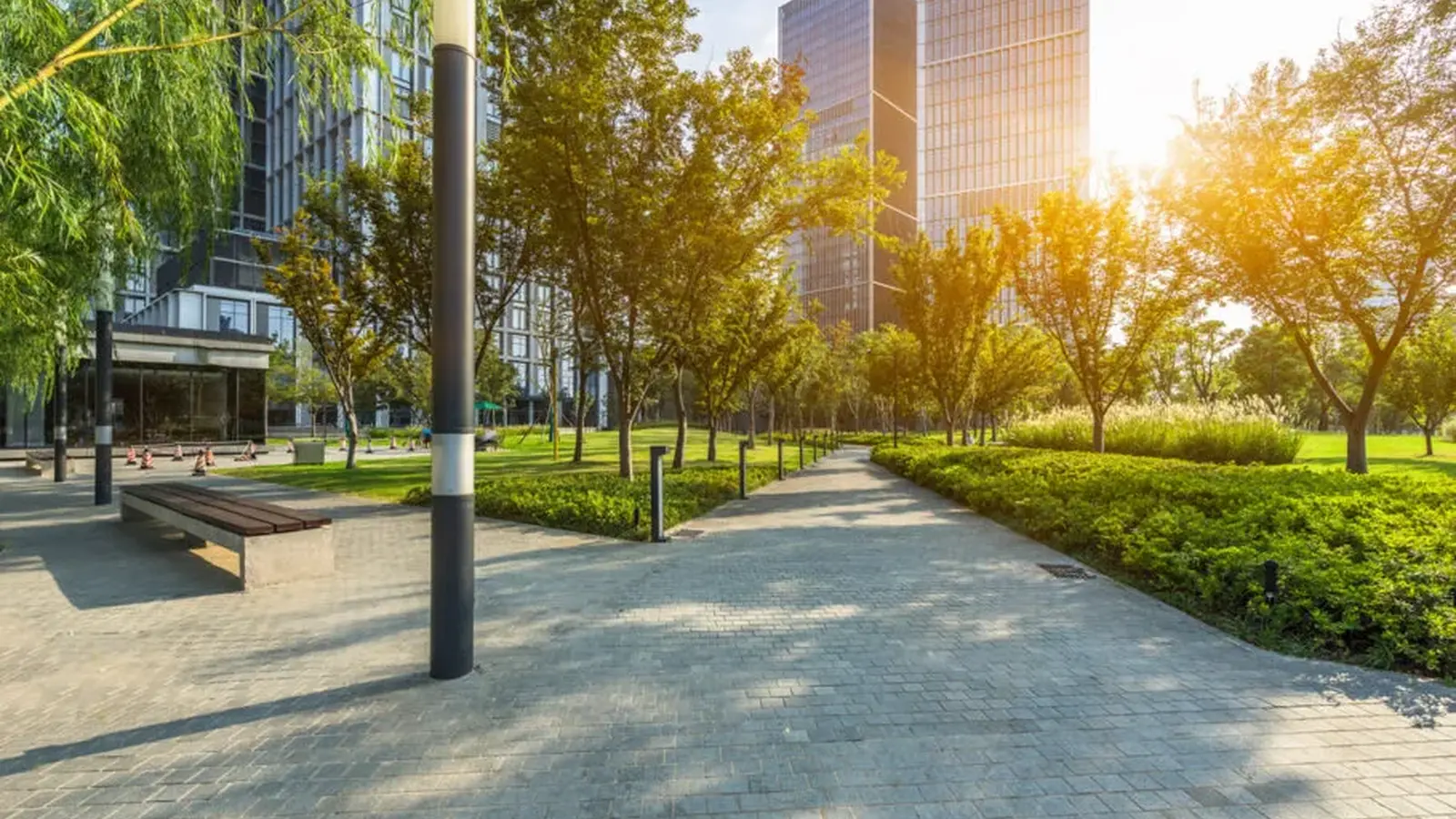
Planting trees doesn't automatically mean cleaner city air. In fact, on hot days some urban trees quietly pump out gases that help form ground-level ozone — the same smog that stings your eyes and aggravates asthma.
Researchers at Jinan University in China arrived at this unsettling conclusion after deploying a high-resolution monitoring setup on a 102-meter platform above Beijing's meteorological tower and in a flanking laboratory. The instruments sampled atmospheric particles several times per second, capturing the chemical fingerprints of emissions in real time. That let the team separate sources of volatile organic compounds — traffic, cooking, cleaning products, and the emissions leaking directly from trunks and leaves.
One compound stood out: isoprene, a naturally produced hydrocarbon also found in raw rubber. Surprisingly, most of the isoprene measured in the city air did not come from factories or cars; it came from trees. And temperature mattered. When air warmed from 20 to 35 degrees Celsius, the chemical activity of tree-emitted compounds jumped seven to eightfold. Heat turned quiet urban vegetation into an outsized source of ozone-forming precursors.
Beijing's numbers were striking. The city’s isoprene emissions reached levels comparable to those of natural forests. The reason was not mystery: the city’s green spaces are dominated by species such as the weeping willow and Chinese poplar, which naturally release large amounts of isoprene. In effect, the choice of trees made an otherwise beneficial canopy into a significant contributor to summertime ozone formation.

Are other cities at risk? Yes. The researchers point to northern Chinese cities like Harbin and Changchun, and even urban areas across parts of Asia and Oceania with similar planting palettes. Local climates and species mixes interact; rising temperatures amplify emissions, so places that are warming fastest will feel the effect most sharply.
Contrast that with many European urban forests. Native European trees tend to emit more monoterpenes than isoprene. Those compounds still react in the atmosphere, but they are generally less efficient at producing ground-level ozone under typical urban conditions. So the problem is not trees per se, but which trees we plant where and how hot the city gets.
The takeaway is not to cut down canopy or erase green space. Far from it. Trees cool streets, reduce runoff, and provide health and social benefits that cities desperately need. Instead, the study argues for smarter species selection. Strategic planting can retain the benefits of urban greenery while limiting volatile emissions that worsen ozone pollution.
If city planners act on this research, the gains could be tangible. The authors estimate that swapping just one in ten high-emitting trees in Beijing for low-emission species could lower isoprene output by at least 29 percent. Small changes in composition. Big reductions in a dangerous air pollutant.
As heatwaves become more frequent and cities race to green their neighborhoods, this research suggests a new rule of thumb: not all shade is the same. Choosing the right trees may be as important as planting them.

Leave a Comment
Comments
No comments yet. Be the first.