
4 Minutes
New direct dates for dinosaur eggs from Qinglongshan
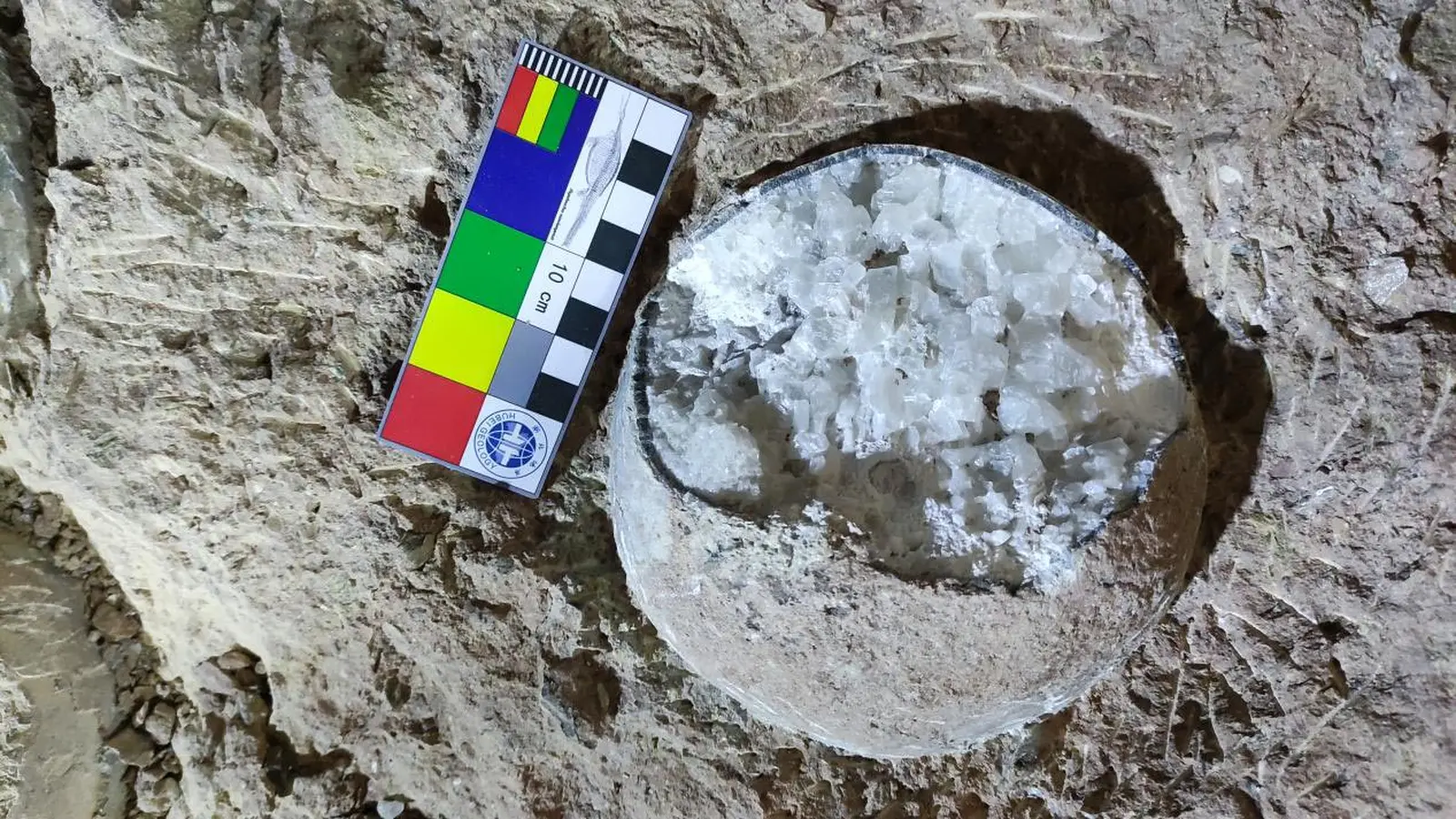
For the first time, researchers have directly dated fossilized dinosaur eggs using carbonate uranium–lead (U–Pb) geochronology — a technique the team calls an "atomic clock for fossils." The study focused on a large clutch of eggs recovered from the Qinglongshan site in the Yunyang Basin of central China and shows the clutch was deposited approximately 85 million years ago during the Late Cretaceous.
Scientific background and site context
Qinglongshan is China’s first national reserve dedicated to dinosaur egg fossils. Excavations have revealed more than 3,000 egg specimens across three principal excavation areas. Many of these eggs are preserved in breccia, mixtures of breccia and siltstone, and fine-grained sandstones, and most remain articulated in original positions with little deformation. The majority appear to belong to a single egg type, Placoolithus tumiaolingensis, assigned to the family Dendroolithidae and notable for unusually porous eggshell microstructure.
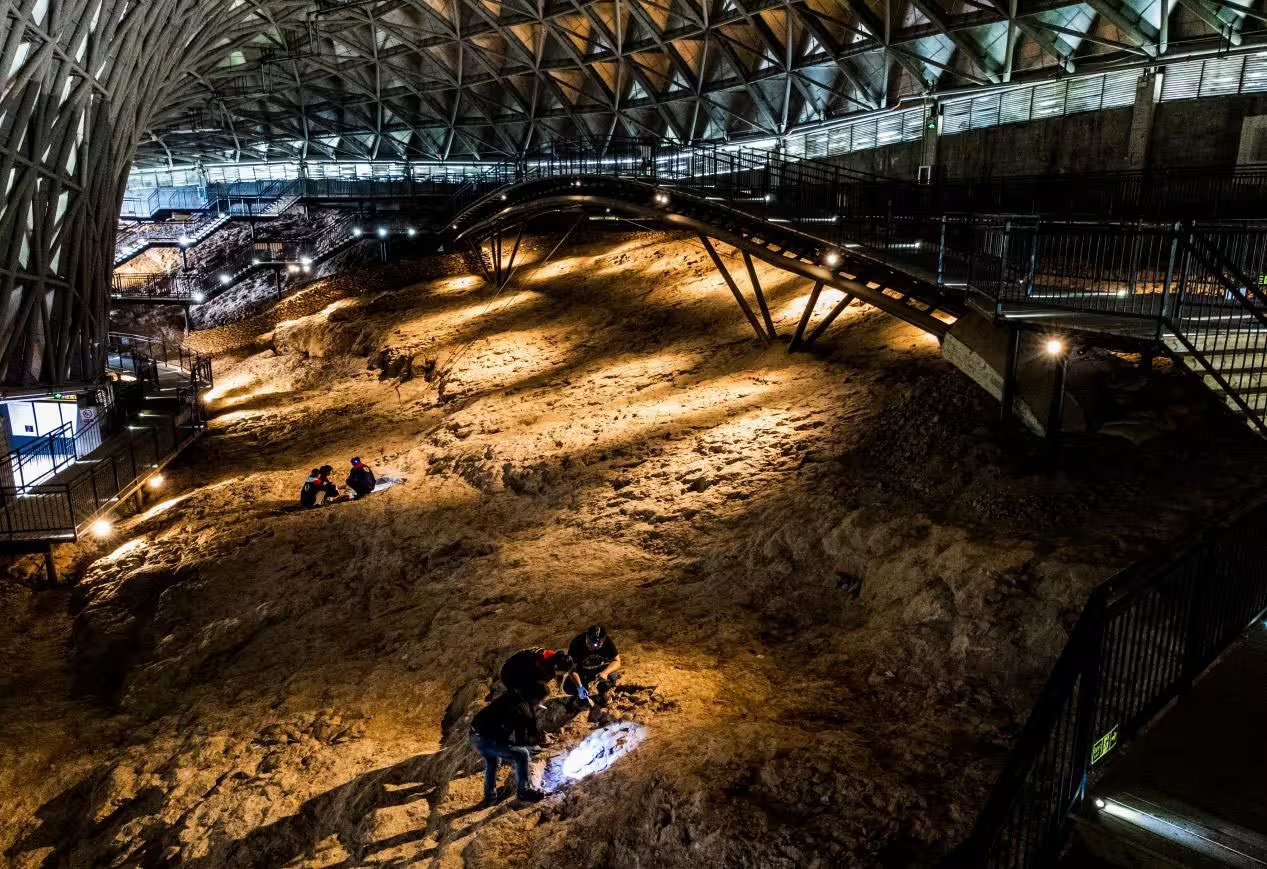
Interior of Qinglongshan Dinosaur Egg Fossil Museum
Traditional methods for constraining the ages of dinosaur eggs rely on dating volcanic ash layers or minerals adjacent to fossil horizons. Those approaches provide indirect constraints: ash layers can predate or postdate egg deposition, and subsequent geological processes may reset mineral ages. Direct carbonate U–Pb dating measures isotopes inside the eggshell itself, enabling a primary date for the time of egg mineralization rather than relying on surrounding strata.
Methods: U–Pb carbonate dating as an "atomic clock"
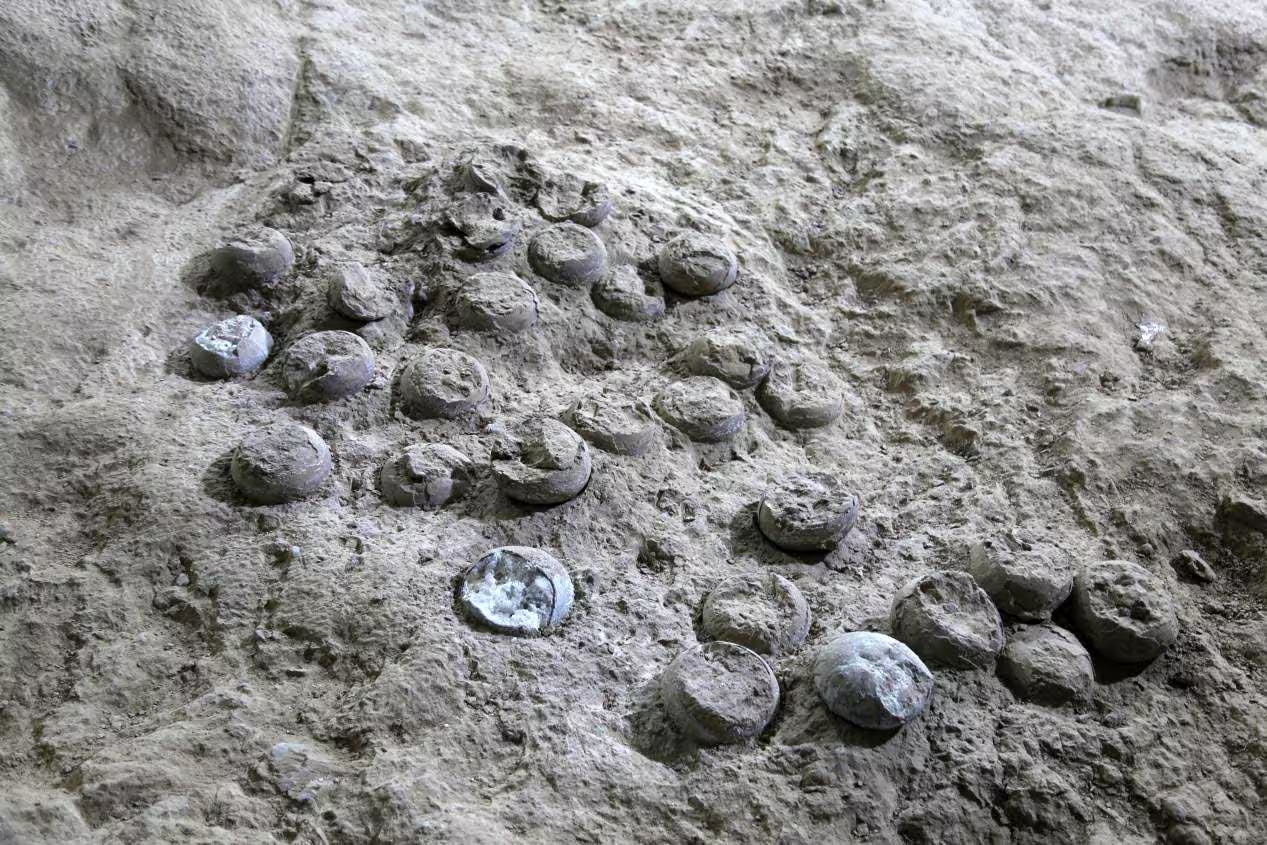
Egg clutch sampled for chronological studies
The team selected a calcite-filled egg from a clutch of 28 eggs embedded in breccia-rich siltstone. Using a micro-laser, they ablated tiny volumes of carbonate from the eggshell and filled interior, generating an aerosol analyzed in a mass spectrometer to count uranium and lead isotopes. Because uranium decays to lead at well-known rates, the measured U/Pb ratios yield an absolute age for the carbonate phase in the eggshell — effectively an atomic-scale clock anchored in the fossil itself.
Results indicate the egg cluster was deposited around 85 million years ago, with a one-sigma uncertainty window of roughly ±1.7 million years. These ages are consistent with measured ages of host rocks and provide the first robust chronological constraints for Qinglongshan egg-bearing deposits.
Key discoveries and paleoclimate implications
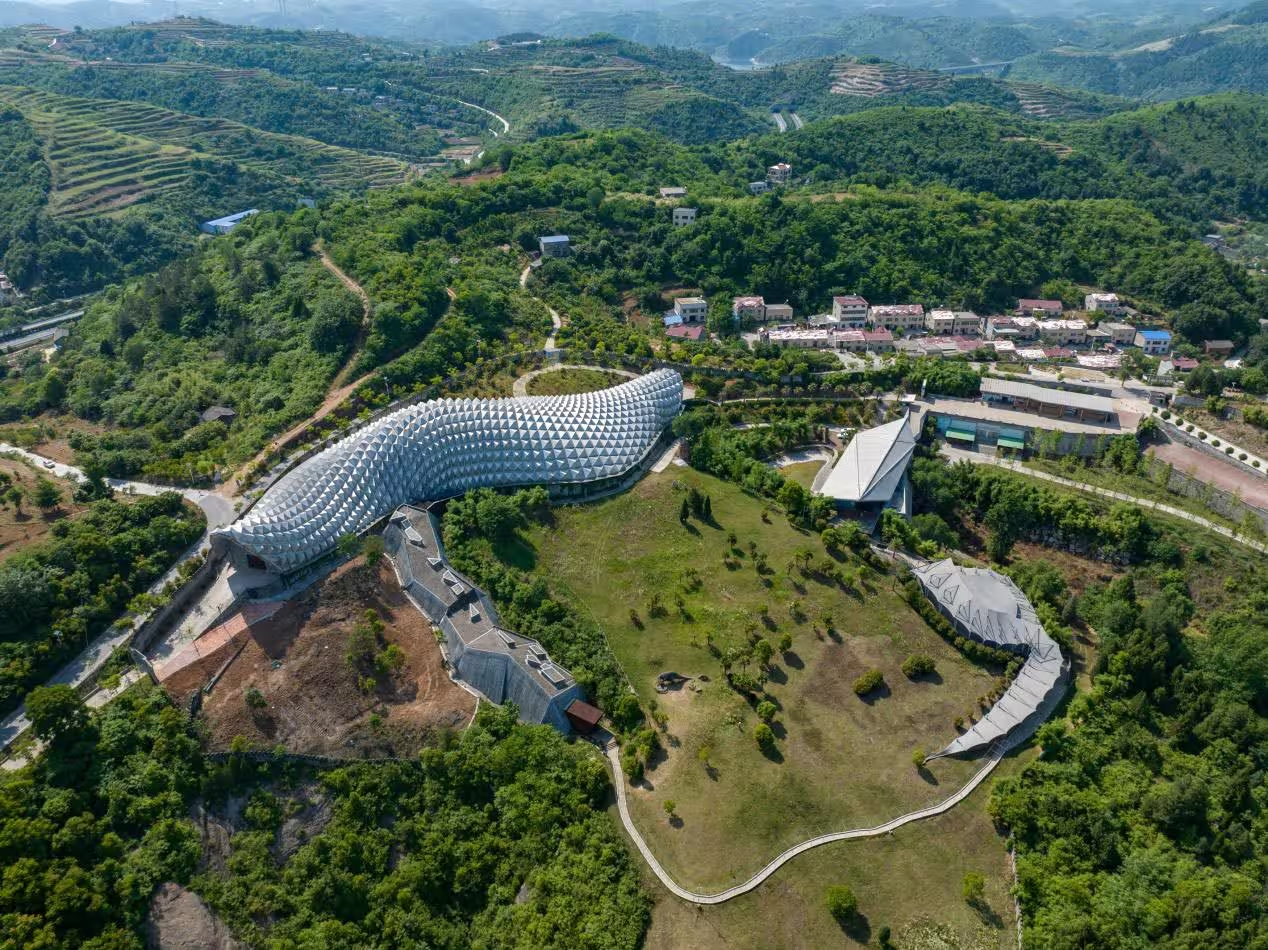
Aerial view of Qinglongshan Dinosaur Egg Fossil Site
Placing these eggs at ~85 Ma situates them in the Late Cretaceous, an interval that experienced significant climatic cooling after an earlier Cretaceous thermal maximum. Global temperatures had begun to fall in the Turonian, and by the time these eggs were laid there was a marked shift toward cooler conditions. The porous, dendritic pore structures of Dendroolithidae eggs might represent reproductive adaptations to changing climates — for example, modifications to gas exchange or incubation in shifting thermal and humidity regimes.
The authors suggest Placoolithus tumiaolingensis may reflect a specialized reproductive strategy that ultimately did not persist as climates cooled and ecosystems restructured. Direct dating of eggs opens the door to refined timelines for dinosaur reproductive ecology, population turnover, and migration patterns across basins.
Future directions and broader significance
Although the published study sampled relatively few eggshell fragments, all yielded concordant ages. The research team plans to expand sampling across different stratigraphic levels at Qinglongshan and to test Dendroolithid eggs from neighboring basins to map geographic and temporal patterns of egg types. Wider application of carbonate U–Pb dating promises to establish a global framework for dinosaur egg chronologies and to link reproductive behaviors to environmental and extinction dynamics.
Beyond paleontology, methodological advances in micro-laser ablation and high-precision isotope counting extend the toolkit for geochronology of carbonate-bearing fossils, concretely tying fossil material to absolute time and improving correlations between local sites and global events.
Expert Insight
"Directly dating eggshell carbonate is a game-changer," says Dr. Karen Mitchell, a vertebrate paleobiologist at the Institute for Paleoenvironments (fictional). "It removes ambiguity about whether nearby ash or minerals truly record the time of burial. When applied across multiple sites, this approach can reveal how reproductive strategies evolved in response to climate shifts during the Late Cretaceous."
Conclusion
Direct carbonate U–Pb dating applied to Qinglongshan eggs provides the first unambiguous ages for a major dinosaur egg reserve in China and demonstrates a scalable method for dating fossil carbonates. At ~85 million years old, these eggs offer a new temporal anchor for studies of Late Cretaceous ecosystems, reproductive evolution, and the environmental pressures that shaped dinosaur diversity before the end-Cretaceous mass extinction.

Leave a Comment
Comments (3)
Nice step forward, but sampling few eggs feels premature. need broader sampling across basins, not just Qinglongshan.
Interesting method but is carbonate U-Pb vulnerable to diagenesis? seems risky, any controls?
wow this is wild! dating eggs directly, like an atomic clock. mind blown, but how widespread is this? curious...