
5 Minutes
Erythritol — a widely used sugar alcohol found in protein bars, energy drinks and many 'keto' products — has long been marketed as a safer alternative to sugar. New laboratory research, however, suggests this familiar sweetener could damage the blood-brain barrier and upset blood-vessel function in ways that raise concerns about stroke and cardiovascular risk.
What the new study found and why it matters
Researchers at the University of Colorado exposed cultured cells from the blood-brain barrier to concentrations of erythritol comparable to those measured in people after drinking a single sweetened beverage. The results show a cascade of harmful effects: oxidative stress, weakened antioxidant responses, impaired cell function and in some cases cell death. Those cellular changes can make the brain more vulnerable to blood clots — a major cause of ischaemic stroke.
Beyond direct damage to barrier cells, erythritol disrupted the balance of molecules that control blood-vessel tone. The sweetener reduced production of nitric oxide, a vasodilator that helps vessels relax, while increasing endothelin-1, a peptide that constricts vessels. This push–pull shift toward constriction could reduce blood flow to brain tissue at times of need and is a known early warning sign for ischaemic events.
How erythritol may interfere with the body’s clot defenses
Another striking laboratory observation: erythritol appeared to blunt the release or activity of tissue plasminogen activator (tPA), the body’s primary 'clot buster' that dissolves dangerous clots in blood vessels. If this mechanism is impaired, small clots that would ordinarily be cleared might instead persist and grow — increasing the chance of a blocked artery in the brain or heart.
These cellular experiments line up with earlier population-level studies that linked higher circulating erythritol concentrations to roughly doubled odds of major cardiac events in some cohorts. While observational data cannot prove causation, the new mechanistic evidence helps explain a plausible pathway from erythritol exposure to increased vascular risk.
Scientific background and study limitations
It’s important to put the findings in context. Erythritol is a sugar alcohol produced naturally in small amounts by the human body and approved for food use by agencies such as the US FDA and EFSA. Its culinary advantages — about 80% as sweet as sucrose and minimal aftertaste — make it attractive for low-calorie and ketogenic products.
But the University of Colorado work was performed on isolated cells in laboratory dishes, not on intact, living blood vessels or human subjects. Cells can behave differently in a dish than inside a functioning circulatory system. Scientists emphasize the need for follow-up studies using more realistic models — for example, advanced 'blood vessel on a chip' platforms, organoids or controlled animal studies — and ultimately, randomized human trials when ethical and feasible.

What we can reasonably conclude now
- Laboratory data indicate erythritol can induce oxidative stress and impair protective functions in blood-brain barrier cells at concentrations seen after common dietary exposure.
- Those cellular effects provide a biologically plausible link to observational findings that associated high erythritol levels with cardiovascular events.
- Limitations in study design mean we cannot yet say erythritol causes strokes in people, only that a credible mechanism exists and further research is warranted.
Regulatory stance, trade-offs and consumer choices
Regulatory bodies have judged erythritol safe based on available toxicology and tolerance data. But safety assessments often focus on acute toxicity and digestive tolerance; long-term vascular or neurological effects are harder to detect in standard reviews, especially for additives that have become ubiquitous only over recent decades.
The real-world choice for consumers commonly involves trade-offs: replacing sugar with erythritol may reduce calorie intake and blunt blood glucose spikes — advantages for weight management and diabetes prevention. Yet if frequent erythritol use subtly weakens vascular or barrier defenses over years, the balance of benefit versus risk could shift. That tension is central to modern nutritional science: additives designed to solve one health problem may create unexpected complications elsewhere.
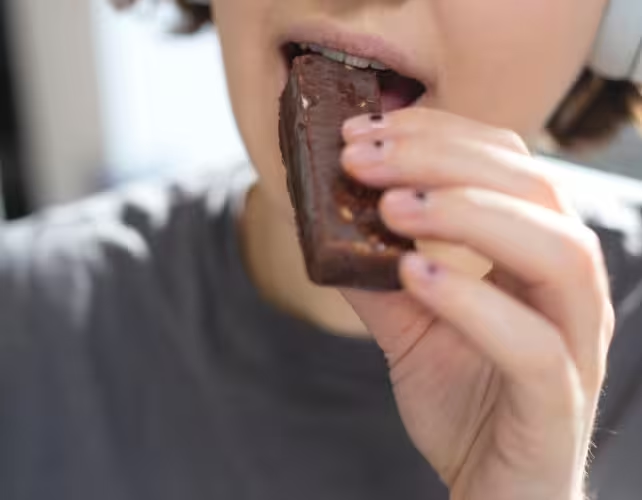
Erythritol can be found in many keto-friendly products, such as protein bars.
Practical guidance while the science advances
For now, clinicians and consumers should adopt a measured response. Individuals at high cardiovascular risk, with prior stroke or with multiple risk factors (hypertension, diabetes, smoking, obesity) may reasonably limit intake of erythritol-containing products until stronger human evidence is available. Diversifying sweetener choices, reducing overall sweetness exposure, and prioritizing whole foods rather than processed 'sugar-free' snacks are low-cost strategies to lower possible risk.
Researchers recommend carefully designed clinical studies and improved physiological models to test whether the lab findings translate to living arteries and, ultimately, clinical outcomes. Meanwhile, clear labeling and more research into long-term vascular effects would help consumers make informed choices.
Expert Insight
'The cellular signals reported here are concerning because they hit three separate vascular safeguards at once: barrier integrity, vessel tone and clot resolution,' says Dr. Anna Morales, a cardiovascular physiologist and science communicator. 'That kind of multi-pronged impairment, even if modest per exposure, could add up over years in people who consume erythritol daily.' She adds that controlled human studies are the only way to quantify actual risk and inform recommendations for different patient groups.

As the scientific community follows up with more complex models and human data, the erythritol story is a reminder that 'natural' or food-derived additives are not automatically risk-free. Consumers, clinicians and policy makers will need to weigh short-term benefits against potential long-term harms as new evidence emerges.

Leave a Comment
Comments (2)
Wow, I love sugar-free bars but now I'm paranoid. Maybe cut back, or rotate sweeteners? ugh, decisions. Anyone else feeling the same??
Wait, so erythritol might mess with the blood brain barrier? Sounds worrying but lab dish results often dont mean much in ppl… we need human trials, stat.