

New observational research suggests a surprising benefit: patients with advanced lung cancer or metastatic melanoma who received a COVID-19 mRNA vaccine near the start of immunotherapy lived notably longer than those who did not. The finding, from collaborative teams at the University of Florida and MD Anderson Cancer Center, raises fresh questions about how mRNA technology might amplify cancer treatments.
Cancer Prevention Vaccine Immunotherapy Fight Punch Boxing Glove Doctor
What the study examined and why it matters
Investigators reviewed records for more than 1,000 patients treated at MD Anderson between 2019 and 2023, focusing on people with Stage 3–4 non-small cell lung cancer and metastatic melanoma who received immune checkpoint inhibitors. They compared outcomes for those who had a COVID-19 mRNA vaccine within 100 days before or after beginning immunotherapy with those who did not receive an mRNA shot in that window.
The results were striking: vaccinated patients showed substantially longer median survival. Among 180 advanced lung cancer patients who received an mRNA vaccine within the 100-day window, median survival reached 37.3 months versus 20.6 months for unvaccinated peers. In metastatic melanoma, vaccinated patients lived notably longer as well — median survival rose from about 26.7 months in the unvaccinated group to roughly 30–40 months in vaccinated patients, with some still alive at the time of data collection.
These are observational data, so causation isn’t established. Still, the potential clinical implications are large: if an mRNA vaccine can consistently enhance immunotherapy responses, it could change treatment timing, vaccine development, and trial design across oncology.
How an mRNA shot might prime anti-cancer immunity
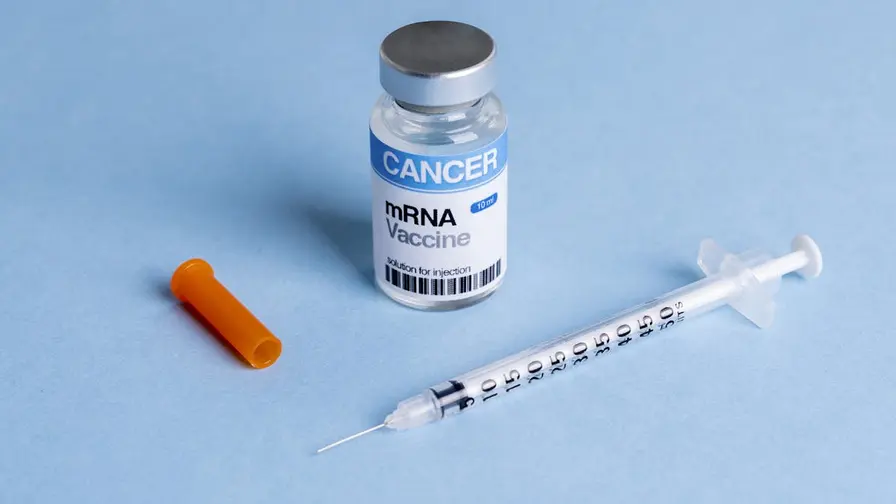
To understand why a COVID mRNA vaccine could help, it helps to review basic immunology and recent mRNA research. mRNA — messenger RNA — carries instructions that tell cells how to build proteins. In vaccines, mRNA is packaged into lipid nanoparticles to deliver its message safely to immune cells. The technology behind the COVID-19 vaccines matured rapidly during the pandemic, creating a platform now being repurposed for other diseases, including cancer.
Researchers led by Elias Sayour at the University of Florida have been exploring “nonspecific” mRNA vaccines: formulations that broadly activate the immune system rather than targeting a tumor-specific protein. In animal models, pairing these nonspecific mRNA vaccines with immune checkpoint inhibitors — drugs that release inhibitory brakes on immune cells — produced powerful antitumor responses. The mechanism appears to be systemic immune activation that redirects immune cells away from immunosuppressive tumor microenvironments toward lymphoid organs where they can be reprogrammed and expanded.
That earlier lab finding prompted a practical question: could the authorized COVID-19 mRNA vaccines, which also robustly stimulate innate and adaptive immune responses, produce a similar effect in humans receiving checkpoint blockade?
Laboratory evidence supports the clinical observation
UF researchers supplemented their patient-data review with controlled experiments in mice. In those preclinical studies, combining checkpoint inhibitors with an mRNA vaccine encoding the SARS-CoV-2 spike protein converted previously resistant tumors into therapy-responsive ones, slowing or halting tumor growth. The experiments suggest a plausible biologic pathway: an mRNA vaccine can act as an immune flare that mobilizes immune cells, changes the tumor microenvironment, and improves the ability of immunotherapy to clear cancer cells.

Elias Sayour, left, work in the lab.
The team also compared outcomes with non-mRNA vaccines. Notably, patients who received routine influenza or pneumonia vaccines did not show the same survival benefit, implying the effect may be linked specifically to the immune activation profile of mRNA platforms.
Who saw the biggest gains?
Interestingly, the survival advantage was most pronounced in patients whose tumors had molecular features or clinical histories that would normally predict a poor response to immunotherapy. That suggests mRNA-driven immune priming might overcome some forms of resistance to checkpoint blockade — a particularly valuable effect in advanced-stage disease where options are limited.
As Duane Mitchell, M.D., Ph.D., noted, the magnitude of the observed benefit is the kind of difference clinicians aim to achieve with therapeutic interventions, and it merits urgent prospective testing.
Next steps: randomized trials and broader testing
Investigators emphasized the need for a randomized clinical trial to confirm causality. UF and partners are designing a large, multi-site trial through the OneFlorida+ Clinical Research Network, which includes hospitals and clinics across several states. If the result is replicable, it could catalyze new strategies: administering mRNA vaccines around the time of immunotherapy, optimizing nonspecific mRNA formulations tailored to oncology, or developing an off-the-shelf immune-priming vaccine that works across cancer types.
Betsy Shenkman, Ph.D., explained that OneFlorida’s mission is to translate discoveries from academic labs into real-world care — a critical step for findings with potential to impact many patients.
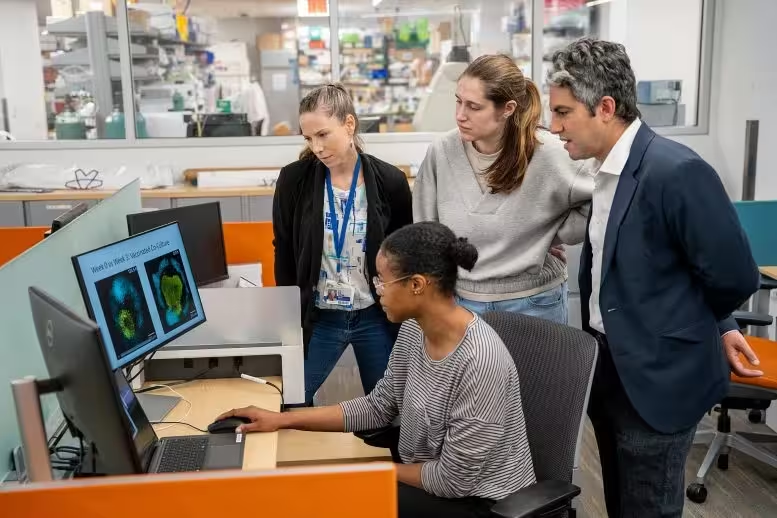
Elias Sayour (right) and lab members review results.
Potential implications for patients and oncology practice
For people with advanced cancers, even modest incremental survival gains are meaningful. If mRNA vaccination near immunotherapy start times increases response rates or extends survival by a measurable fraction, oncologists could incorporate vaccine timing into treatment planning. Beyond timing, the research points to the broader promise of mRNA platforms: by harnessing engineered immune activation, scientists may design vaccines that enhance standard therapies without needing to tailor targets to each tumor’s unique mutations.
Jeff Coller, Ph.D., an mRNA researcher at Johns Hopkins, framed the discovery as another unanticipated benefit emerging from the rapid development of mRNA technology during the COVID-19 pandemic. The same platform that enabled pandemic vaccines now shows potential to reshape cancer immunotherapy.
Risks, caveats, and scientific rigor
Important caveats apply. The MD Anderson/UF analysis is retrospective and observational. Confounding factors—such as differences in health status, care access, or timing of other treatments—could influence survival differences. That’s why a randomized, controlled trial is essential to determine whether the vaccine itself is responsible for improved outcomes and to rule out bias.
Safety monitoring will be central to future trials. Although mRNA vaccines have demonstrated strong safety profiles in large-scale public-health use, cancer patients on immunotherapy represent a distinct population with complex immune dynamics. Trial teams will need to carefully track immune-related adverse events and long-term outcomes.
Expert Insight
"This study opens an exciting line of inquiry: can a broadly activating immune stimulus make immunotherapy work better across different tumors?" says Dr. Laila Fernandez, an immuno-oncology researcher at a major academic center. "The mRNA platform gives us a flexible tool to test the idea. If randomized trials confirm the signal, we could repurpose existing vaccines or build new nonspecific formulations to act as immune primers alongside standard cancer therapies."
Fernandez added that patient selection, timing, and combination regimens will be the levers that determine whether this approach can move from intriguing observation to standard-of-care practice.
What to watch next

Over the coming months and years, the oncology community will look for confirmation from randomized trials and additional real-world datasets. Researchers will also investigate molecular markers that predict who benefits most, define the ideal vaccination window around immunotherapy, and test optimized nonspecific mRNA vaccines designed specifically to reprogram anti-tumor immunity.
For patients and clinicians, the take-home is balanced optimism: observational evidence suggests a meaningful association between COVID mRNA vaccination and improved survival in two difficult-to-treat cancers, supported by convincing preclinical biology. If confirmed, the finding could be a practical and affordable lever to enhance life-extending cancer therapies.

Leave a Comment
Comments (2)
is this even true? observational study, could be confounding. curious why flu shots didnt show it too, timing matters tho, if that's real then huge but i'm cautious
Wow, didnt expect this… mRNA possibly boosting immunotherapy? Goosebumps. Hope trials confirm it, but what a real glimpse of hope for patients. fingers crossed