
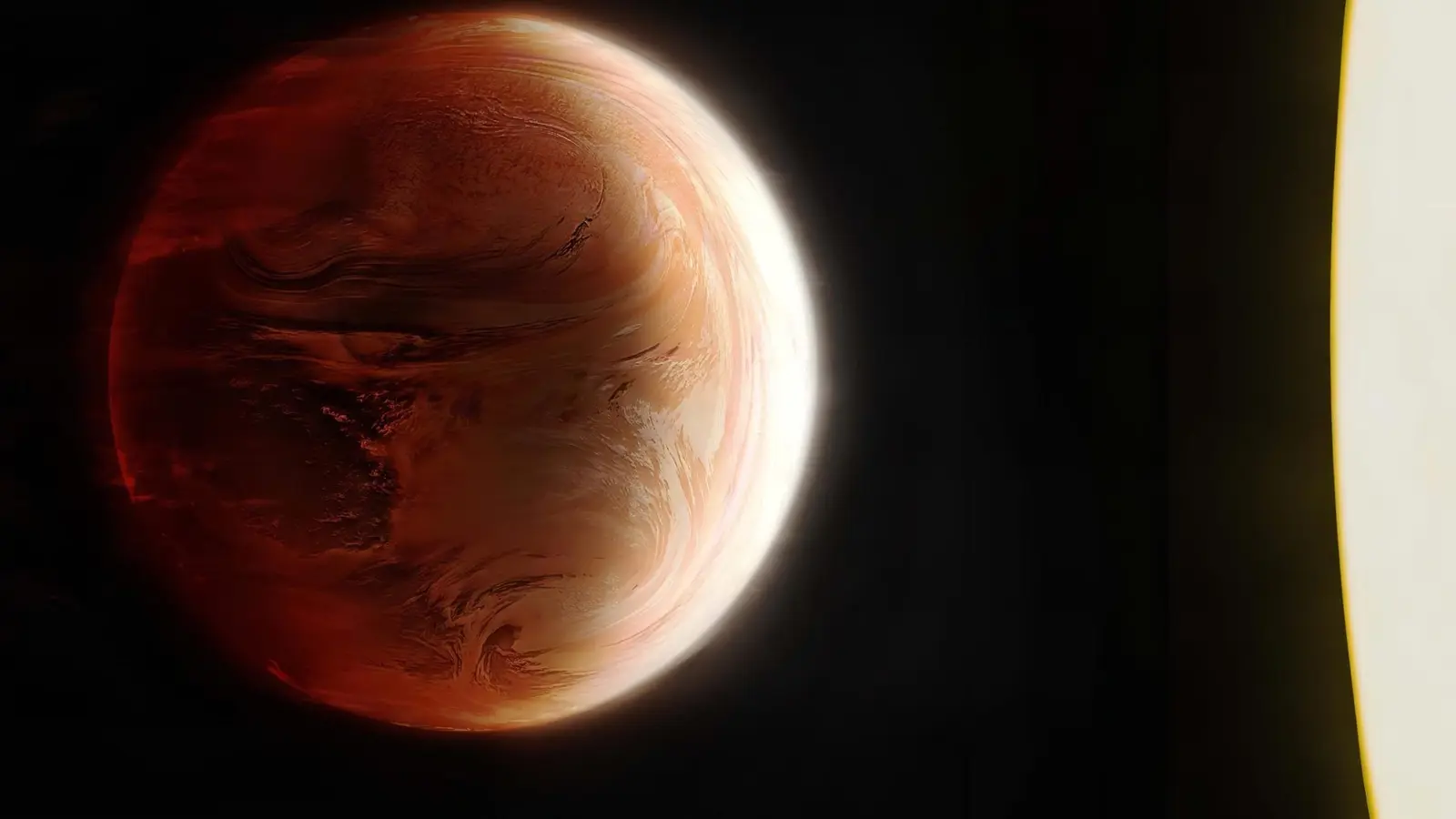
Imagine a planet where sunrise and sunset do not agree. On WASP-121 b, the two edges of the day-night divide behave almost like separate atmospheres, and the James Webb Space Telescope has finally given us a window onto that strange divide.
The discovery came during transits, when the planet slides in front of its star and a sliver of starlight filters through the outermost layers of its atmosphere. Spectra from JWST's near-infrared instrument recorded how that light was absorbed, and the signal changed as the world rotated a few dozen degrees during the crossing. Simple assumption: the terminator is uniform. Reality: anything but.
For the first time, astronomers have resolved clear differences between the morning and evening terminators of an ultra-hot Jupiter. The evening side—what we see trailing the orbit—absorbs more infrared light. The morning side is comparatively muted. That imbalance points to contrasting temperatures and chemistry on opposite limbs of the same planet.
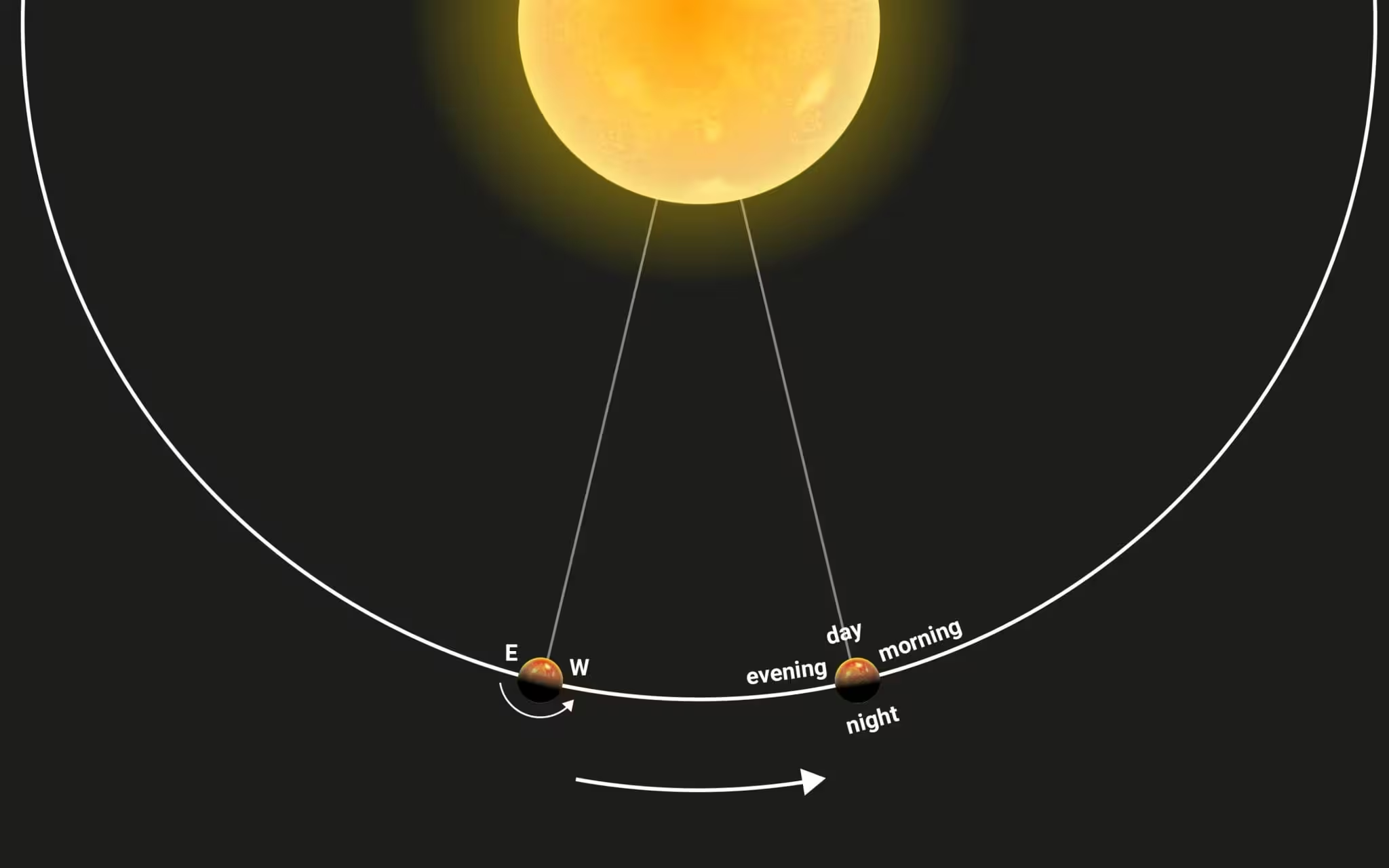
Why would two slices of the same atmosphere diverge so sharply? WASP-121 b is tidally locked, showing one face to its star like a cosmic hand glued in place. The dayside is blistering, with temperatures measured around 2,770 kelvin; the nightside plunges toward roughly 1,000 kelvin. Strong eastward winds ferry heat from day to night, and the airflow carries hot gas into the evening terminator, puffing up the atmosphere there and letting it soak up more starlight.
The spectral fingerprints themselves tell a layered story. Carbon monoxide features strengthen toward the end of the transit, a trend best explained by temperature-driven changes rather than an abrupt spike in CO abundance. Water behaves differently. The JWST data suggest a real depletion of H2O on the evening limb: the upper atmosphere gets hot enough to break water apart, a process called thermal dissociation. In short, heat reshuffles chemistry as it streams across the planet.
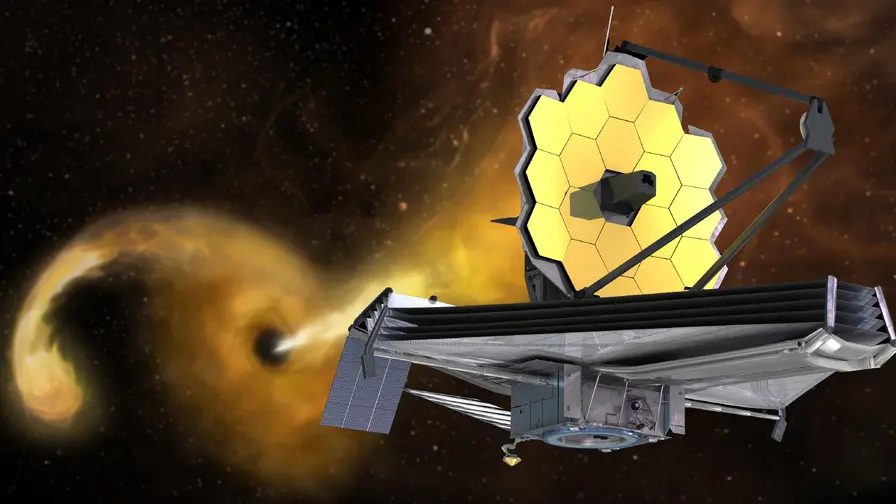
Part of the observational trick was to stop averaging everything into one transit spectrum. Instead of collapsing the data, the research team let the signal evolve with time as the planet rotated. That decision revealed longitudinal variations that would have been smeared out otherwise. Statistically, the model that allowed for changing atmospheric properties fit the measurements much better than a uniform-terminator assumption.
Models of heat transport reproduce the basic east-west asymmetry, but they tended to underestimate the observed contrast. That mismatch nudged scientists to consider additional cooling effects on the morning side. Could clouds be doing the heavy lifting? Not the fluffy water clouds familiar from Earth, but mineral condensates—silicates and other refractory grains—that can form in hot gas giants. Such mineral clouds can block outgoing infrared radiation, making one limb appear cooler even if deeper layers are still warm.

Cloud physics in ultra-hot atmospheres is fiendishly complex. Condensation, evaporation, and vertical mixing operate on different timescales, and most global models still simplify or omit cloud microphysics. When the team approximated cloud opacity in their simulations, the models came closer to matching the observations, but the match was not perfect. More sophisticated treatments will be needed to confirm whether mineral clouds are the missing ingredient.
The method holds promise beyond this single planet. WASP-121 b is a convenient laboratory because it rotates by roughly 30 degrees over a transit, offering just enough change in viewing geometry to separate dawn from dusk. Several other ultra-hot Jupiters share similar properties—short periods, extreme temperatures, and tidally locked spins—making them ripe targets for the same longitudinal mapping technique.
There is a practical payoff here too. By mapping how temperature and chemistry vary with longitude, astronomers can test circulation models under the most extreme conditions and refine predictions about cloud formation, molecular dissociation, and heat redistribution. Those improvements will sharpen our understanding of atmospheric physics across the full spectrum of exoplanets, from temperate Neptunes to searing hot Jupiters.

It is a reminder that planetary weather is not uniform, even when gravity locks a world into a single face toward its star. Dawn and dusk are more than poetic markers on WASP-121 b; they are different climates, different chemistries, different windows onto how atmospheres behave when pushed to extremes. What will we learn when we apply the same lens to more planets? The next transits will tell.

Leave a Comment
Comments (2)
hmm is this real or are the models just overfitting? mineral clouds plausible, but feels like many assumptions and sim tweaks... wanna see more transits
wow, mind blown, dawn and dusk being different climates? okay that's wild. JWST flexing and my brain melting, need more planets like this pls