
4 Minutes
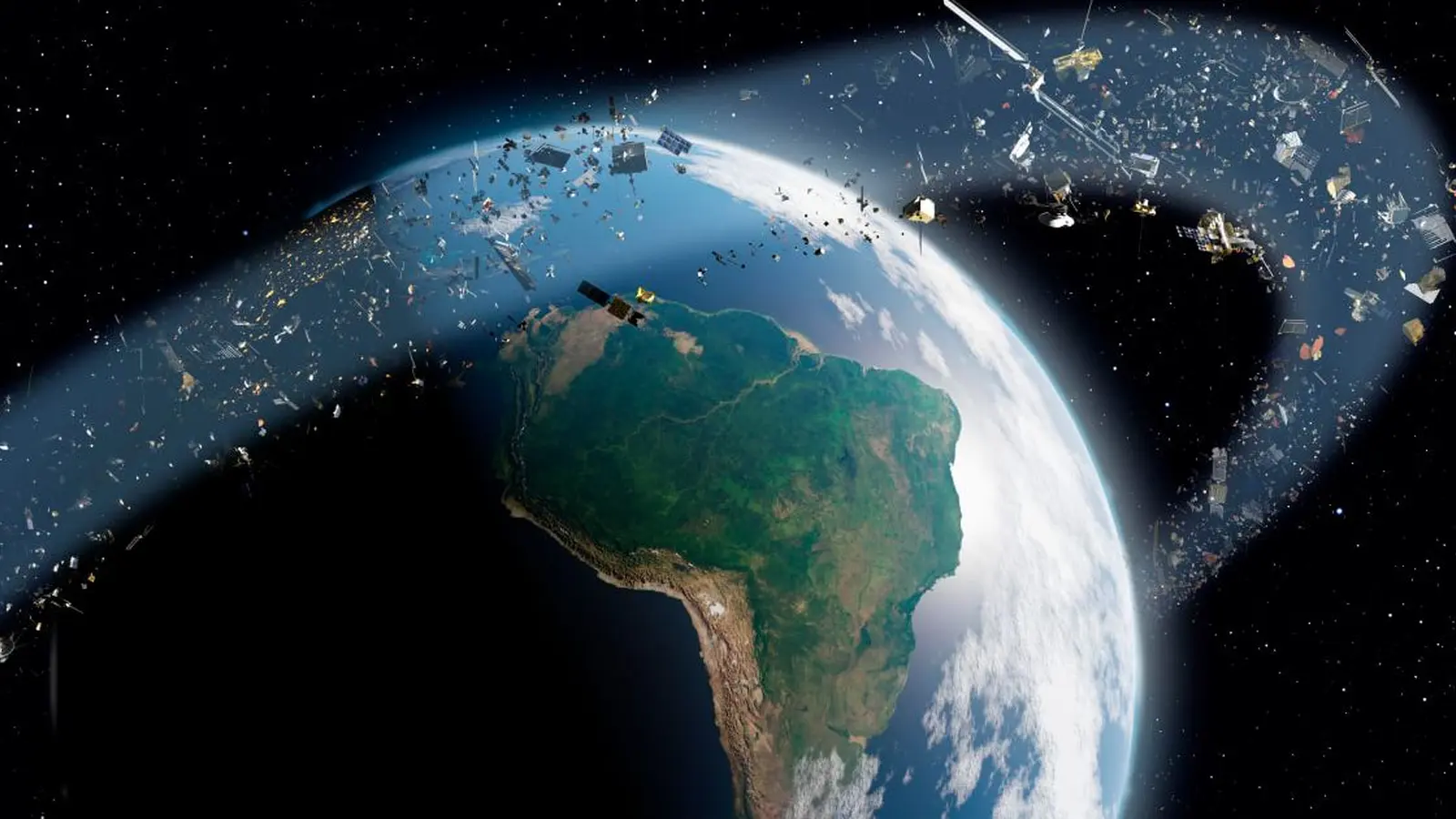
Something that looks like an earthquake can actually be a satellite hitting the atmosphere. Short. Loud. Unexpected.
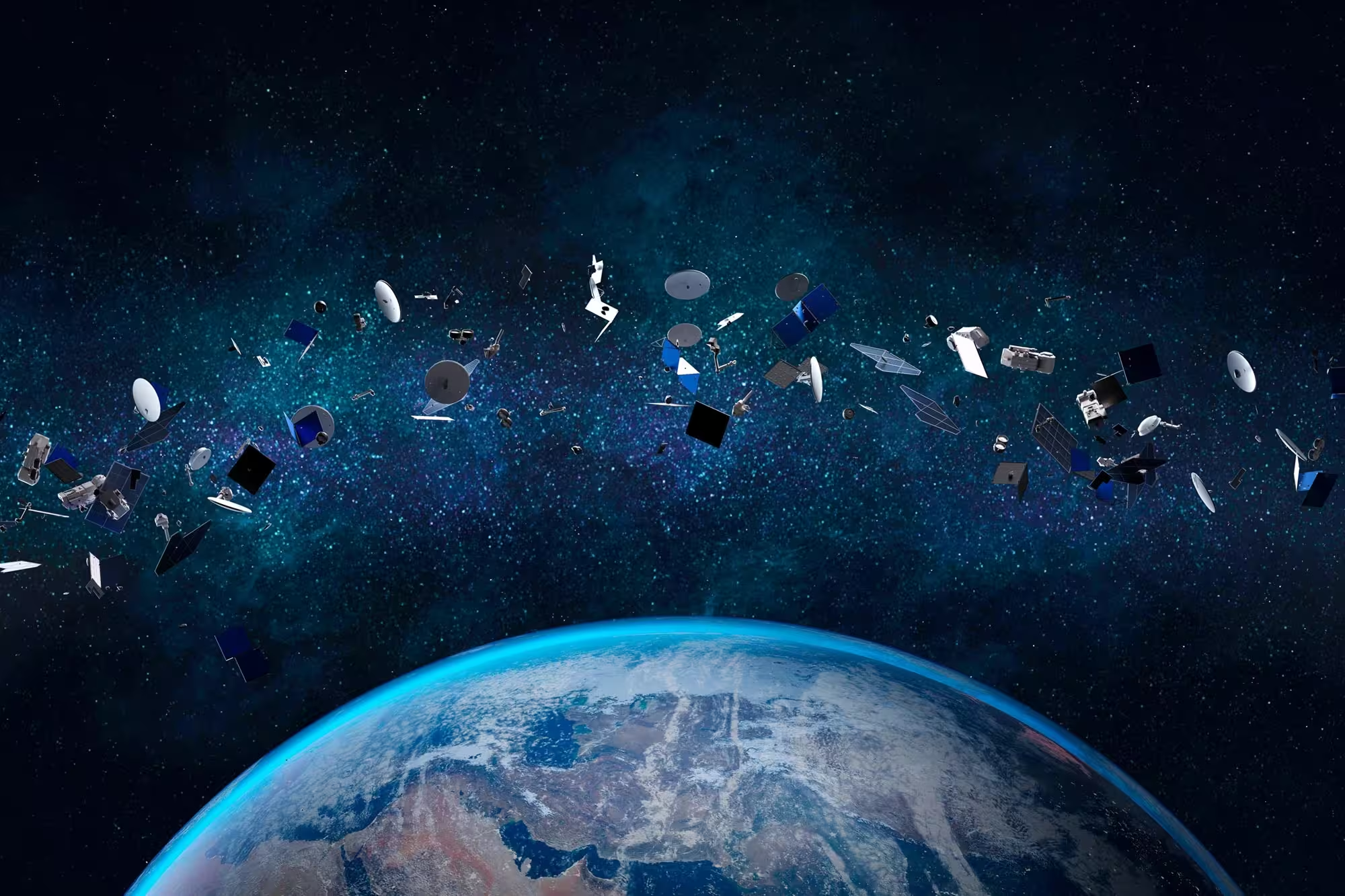
Scientists have discovered that earthquake sensors can detect the shockwaves from falling space junk as it tears through the atmosphere. This new method makes it possible to track debris in near real time and pinpoint where it may land.
When human-made objects in orbit come down, they don’t announce themselves gently. They slam through the air at hypersonic speeds, generating sonic booms that couple into the ground as faint but measurable seismic signals. Researchers at Johns Hopkins University and Imperial College London turned that idea into a working tool: by reading which seismometers pick up those vibrations and when, they can reconstruct a debris fragment’s flight path, its speed, and even where it likely broke apart.
Listening to reentry: method and demonstration
The technique is elegant in its simplicity. A reentering object drives shock waves through the atmosphere; those waves reach the surface and shake the crust. Distributed seismometer networks—installed for earthquake monitoring—record the tiny ground motions. By comparing arrival times and the strength of those signals across a network, analysts trace the line of the sonic booms and infer velocity, direction, and sometimes altitude.
Fernando and his colleagues tested the approach on the orbital module from China’s Shenzhou-15, which reentered on April 2, 2024. Using 127 seismometers across southern California, the team reconstructed a hypersonic trajectory: the module moved at roughly Mach 25–30 and passed northeastward over regions that included Santa Barbara and parts of Nevada. Signal amplitudes and timing allowed them to estimate where the object fragmented and how its actual ground track compared with prior radar-based predictions.
By mapping areas where seismometers in southern California detected sonic booms, researchers at Johns Hopkins University and Imperial College London were able to track the path of the Shenzhou-15 orbital module after it reentered the Earth’s atmosphere on April 2, 2024. Credit: Benjamin Fernando, Johns Hopkins University
Why this matters: accuracy, speed and public safety

Radar and orbital tracking systems do a good job predicting reentry windows, but atmospheric drag, breakup and last-minute maneuvers can throw those predictions off by hundreds or even thousands of miles. Seismic tracking gives you a post‑entry, observational readout of what actually happened. That matters for two reasons: one, it helps search-and-recovery teams narrow down where surviving fragments might be; two, it gives health and environmental authorities better data to model where combustion byproducts and toxic particles could be dispersed.
The team found that the Shenzhou-15 module’s path lay about 25 miles north of the U.S. Space Command’s predicted corridor based on pre-reentry orbital telemetry. That degree of offset can be decisive when organizing response crews or warning potentially affected populations. Past incidents underscore the stakes: there are historical reports—some contested—of radioactive material surviving reentry or of toxic components dispersing after breakup. Faster, independent confirmation helps close that information gap.
Technical context and limitations
Seismometers are not measuring the object directly; they record ground-coupled airwaves. The signal strength depends on the object’s size, speed, angle of attack, breakup behavior and the local geology beneath the sensors. Mountainous or heterogeneous terrain can distort the seismic signature; sparse networks yield coarser reconstructions. Urban sensor arrays, however, are dense in many regions, making those areas particularly suitable for this method.
Practically speaking, seismic detection complements—not replaces—existing tracking systems. Radar and optical assets remain essential for cataloging objects before reentry and for early-warning. Seismic tools are most valuable after an object begins to interact with the atmosphere, providing ground truth and timing that orbital estimates alone cannot supply.
Expert Insight
“Think of the atmosphere and ground as a coupled microphone,” says Dr. Lena Morales, a fictional seismologist and space-environment specialist. “The object writes a sound track in the air that the crust can read. With enough sensors, you can reconstruct that track with surprising clarity. It’s not a silver bullet, but it’s a powerful, widely deployable addition to our toolkit for tracking reentries.”
Beyond the immediate operational advantages, seismic tracking also helps scientists study breakup physics in the real world. Observations of fragmentation points and altitude profiles feed models that predict how mass, velocity and material composition influence whether debris burns up or reaches the surface. Those models, in turn, inform design choices for future satellites and disposal strategies intended to reduce risk.
There are also policy and logistics implications. Near real-time verification of where debris fell increases accountability and improves coordination between space agencies, national authorities and first responders. For nations that lack wide-area tracking infrastructure, tapping existing seismic networks could deliver actionable data with minimal extra cost.

The approach will not make reentries harmless. But it does give us a clearer picture—quickly—of what actually hits the atmosphere and where pieces end up. That clarity matters when public safety, environmental contamination and international coordination are on the line.









Leave a Comment
Comments (2)
is this even true? seismometers read ground coupled airwaves, but mountains and sparse arrays could wreck the timing. who verifies these tracks tho
wow didnt expect quake sensors to pick up falling space junk… kinda eerie but pretty genius. hope they find hot fragments fast