Read More Scince News Space 17 days ago Parker Finds Sun's Alfvén Surface Is Growing and Spikier Parker Solar Probe data show the Sun's Alfvén surface is expanding and becoming more irregular through the solar cycle. This direct mapping sharpens solar-wind models and reveals implications for exoplanet environments.
Read More Scince News Space 17 days ago Could a Supernova Conceal a Rare Superkilonova Merger? Astronomers investigating AT2025ulz report a puzzling transient that may be a "superkilonova" — a kilonova occurring inside the debris of a recent supernova. The event, seen in gravitational waves and light, could reshape ideas about neutron-star formation and heavy-element production.
Read More Scince News Space 19 days ago Baikonur Launch Pad Crash Grounds Russia's ISS Flights A maintenance cabin collapse at Baikonur’s Site 31/6 after Soyuz MS-28's launch has sidelined Russia's only fully certified pad for ISS crew and cargo missions, forcing delays and complex repair decisions.
Read More Scince News Space 19 days ago James Webb Finds a Lemon-Shaped Planet Packed with Carbon JWST observed PSR J2322-2650b, a lemon-shaped exoplanet orbiting a pulsar. Its helium- and carbon-rich atmosphere, extreme tides, and possible diamond-forming interior challenge theories of planet formation and stellar stripping.
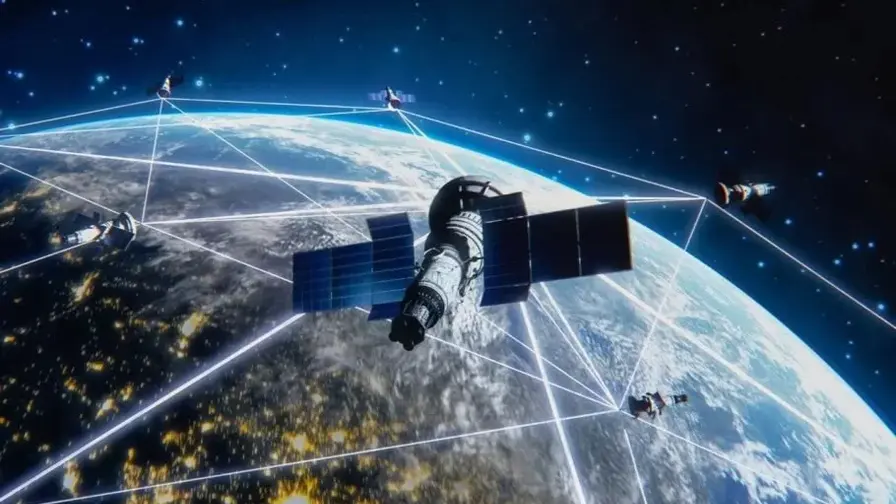
Read More Scince News Space 20 days ago One Solar Storm Could Ground Spaceflight for Decades New research warns a single strong solar storm could trigger collisions in crowded low-Earth orbit, collapsing satellite networks within days. The paper introduces a CRASH Clock showing how fragile current mega-constellations are and outlines mitigation strategies.
Read More Scince News Space 21 days ago Timing Reveals Calm Origins for Some Hot Jupiters Today A timing-based survey shows that about 30 hot Jupiters likely migrated inward through calm, disk-driven processes rather than chaotic, high-eccentricity events—preserving aligned orbits and nearby companions.
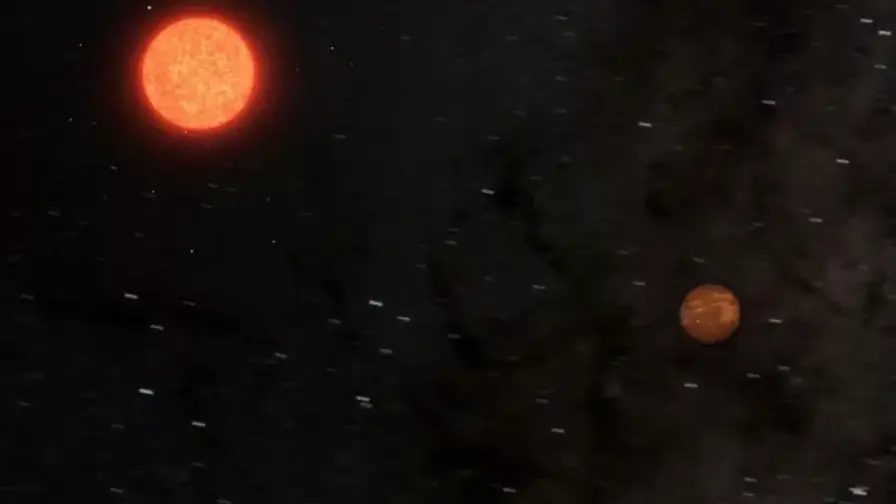
Read More Scince News Space 21 days ago Real-Life Tatooine: A Young Giant Planet Orbits Two Suns Astronomers directly imaged a massive, young exoplanet orbiting two stars — a real-life 'Tatooine.' Found in archival Gemini Planet Imager data, the circumbinary giant challenges planet-formation models and will be tracked for orbital insights.
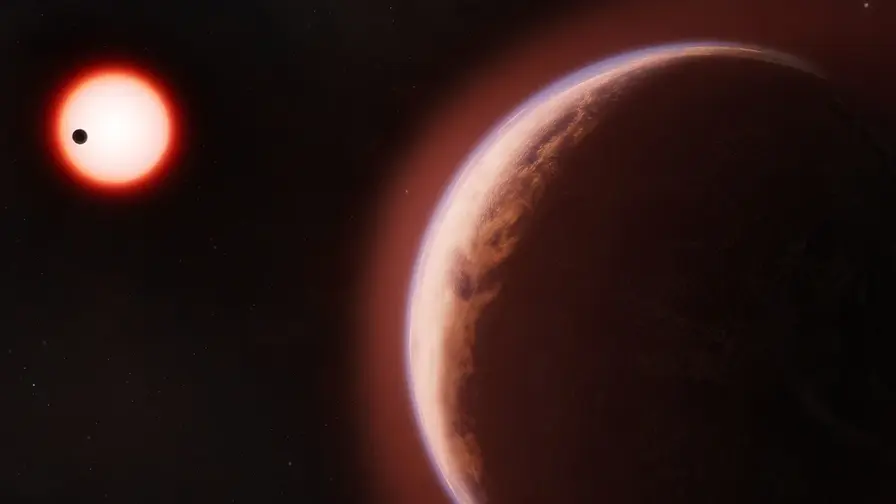
Read More Scince News Space 22 days ago James Webb Finds Atmosphere on Lava World TOI-561 b James Webb observations show TOI-561 b — an ultra-hot super-Earth — likely hosts a thick atmosphere above a global magma ocean, challenging assumptions about small planets losing volatiles near their stars.
Read More Scince News Space 23 days ago JWST Sees Exoplanet Sprout Two Giant Helium Tails Unexpected JWST observations reveal WASP-121b trailing two giant helium tails across nearly 60% of its orbit. Continuous full-orbit spectroscopy exposes complex atmospheric escape and challenges current 3D models of star–planet interaction.
Read More Scince News Space 24 days ago Close Call: Chinese Satellite Passed 200m from Starlink SpaceX reports a Chinese Kinetica 1 payload came within ~200 meters of a Starlink satellite, highlighting risks from crowded low Earth orbit and the need for better coordination to avoid collisions and debris.
Read More Scince News Space 25 days ago Geminid Meteor Shower Peaks: How to Watch the Sky Tonight The Geminid meteor shower peaks on 13–14 December 2025 with up to 150 meteors per hour. Learn why Geminids are special, when to look, and how to get the best view this year.
Read More Scince News Space 25 days ago Mars' Hidden Role: How It Shapes Earth's Climate Cycle New simulations reveal Mars exerts a measurable gravitational influence on Earth's Milankovitch cycles, affecting ice age pacing and obliquity. The discovery reshapes how we assess planetary habitability.
Read More Scince News Space 26 days ago Space Dust Shows Arctic Ice Is Melting Faster Than Thought Researchers used cosmic dust and helium-3 in Arctic seafloor cores to reconstruct 30,000 years of sea-ice history, revealing links between ice loss, nutrient cycling, and ecosystem shifts as the Arctic warms.
Read More Scince News Space 26 days ago Why Super-Jupiters Might Not Resemble Jupiter in Appearance New JWST observations and atmospheric models reveal that many "super-Jupiters" — massive exoplanets — may look very different from Jupiter: hotter, redder and dominated by turbulent, dusty storms rather than neat banded clouds.
Read More Scince News Space 28 days ago Giant Planet and Brown Dwarf Revealed by Subaru and Gaia OASIS discoveries combine Gaia astrometry and Subaru imaging to reveal a massive planet (HIP 54515 b) and a Roman-ready brown dwarf (HIP 71618 B), advancing direct-imaging and coronagraph tests.
Read More Scince News Space 29 days ago Is TRAPPIST-1e Hosting Methane? Webb's Ambiguous Clues Webb’s first spectra of TRAPPIST-1e show tentative methane signatures, but researchers caution the signal may be stellar contamination. New techniques and missions like Pandora will be crucial to confirm an atmosphere.
Read More Scince News Space a month ago 2025 Antarctic Ozone Hole Shrinks: Signs of Recovery NOAA and NASA report that the 2025 Antarctic ozone hole was unusually small and short-lived. Falling chlorine levels and a weaker polar vortex limited ozone loss, reinforcing signs that the Montreal Protocol is driving recovery.
Read More Scince News Space a month ago Voyager 2 Mystery Solved: Solar Storm Supercharged Uranus SwRI researchers suggest a powerful solar wind structure—likely a co-rotating interaction region—boosted Uranus’ radiation belts during Voyager 2’s 1986 flyby, explaining decades-old anomalous measurements.
Read More Scince News Space a month ago Rain on Ancient Mars? Kaolinite Points to a Tropical Past Perseverance spotted kaolinite-rich, pale rocks in Jezero Crater. New analyses suggest prolonged rainfall and tropical-like weathering once occurred on Mars, with implications for ancient climate and habitability.
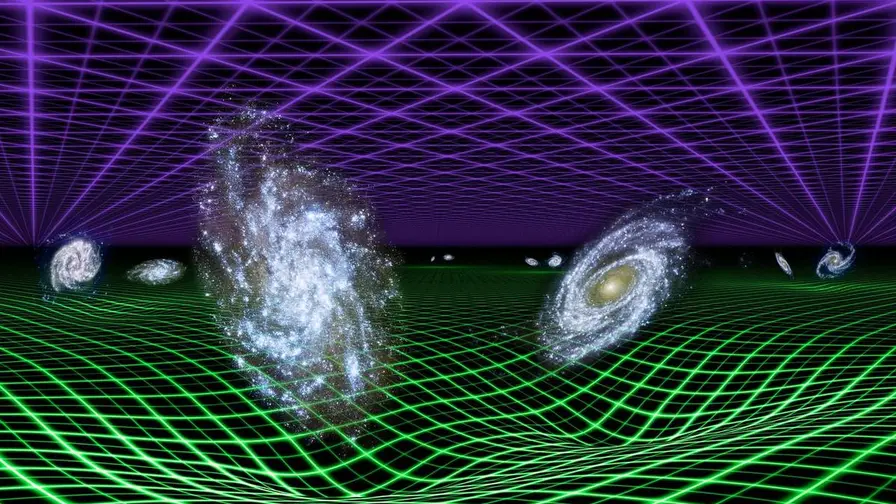
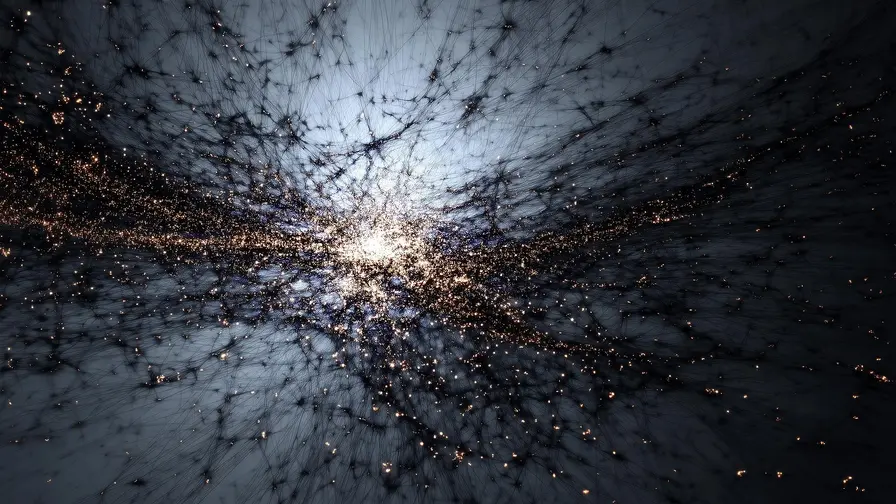
Read More Scince News Space a month ago Cosmic Tornado: Longest Rotating Filament Discovered Astronomers have found a 49-million-light-year rotating filament of galaxies, the longest spinning structure observed. Multiwavelength data show coherent rotation, hydrogen-rich gas, and implications for galaxy spin and cosmic web dynamics.